


A butterfly knife has a unique appeal that is hard to ignore. Instead of opening on a single hinge, this model uses two rotating handles that fold around the blade. This gives it a very different feel in the hand and a smoother, more deliberate motion during use. Some people use it at home for light tasks; others carry it as part of their travel gear for outdoor use; and many enjoy learning flipping skills at their own pace. If you have been drawn to that experience, it is completely understandable.
That said, choosing a butterfly knife based only on how it looks can lead to disappointment. A model that feels exciting at first glance may not feel comfortable to carry, practical for travel, or suitable for how you plan to use it day to day. With that in mind, this article covers three key things worth knowing before you buy.
Read on!

The Three Important Things To Know
1. Know the Right Length
Length might not seem like a big decision at first, but it often becomes one of the most noticeable factors once a butterfly knife is carried regularly. A model that feels exciting at first can start to feel bulky if it does not fit comfortably into daily routines.
- For Everyday Carry: Many people find that shorter blades are simply easier to live with. A blade length of around 3 to 4 inches often strikes a comfortable balance. It is long enough to handle simple tasks around the house, like opening packages or cutting small items. Yet, it’s compact enough to fit naturally into a pocket or bag without constant adjustment.
- For Travel: When packing for trips, portability becomes key. Smaller, lighter knives, often closer to 2 inches in blade length, are easier to store and feel less intrusive when moving through different environments. They slip into luggage more easily and tend to require less thought or adjustment throughout the day, which can make a big difference while traveling.
The helpful part is that many retailers bring multiple butterfly knife size options together in one place. At stores like PVK, blade length, closed length, and overall dimensions are clearly outlined, usually with detailed photos and descriptions. Having this information upfront allows you to compare calmly and choose a knife that suits your everyday or travel needs.

2. Understand Blade and Handle Material Before You Buy
Once size is decided, blade and handle materials matter just as much. This is what decides whether a butterfly knife actually feels good to use every day or slowly becomes something you avoid carrying. A tool can look great, but if the blade does not cut cleanly or the handle feels awkward, it stops being practical very quickly.
Blades made from CPM 154 or S35VN work well for everyday carry because they hold an edge reliably and feel predictable during regular cutting tasks. These steels handle daily use smoothly without feeling fragile. When paired with handles made from aluminum or carbon fiber, the tool stays light, well-balanced, and comfortable in hand.
When it comes to travel, the focus shifts slightly. You want something that stays strong but also feels easy to pack and carry. In most cases, two material combinations tend to work better:
- MagnaCut blade with a carbon fiber handle, because MagnaCut offers excellent corrosion resistance, while carbon fiber keeps the weight low and easy to carry
- CPM 154 blade with a steel or titanium handle, because this combination feels extra solid and holds up well to frequent movement and packing
These options tend to feel more secure in a bag or pocket and require less adjustment while moving around. They also handle occasional use on the go without feeling delicate.

3. Choose a Style That Matches How You Will Use It
Blade style does more than shape how a butterfly knife looks. It influences how the knife cuts, how strong the tip feels, and how comfortable it is to use over time. A blade that looks striking may not always feel practical once it is used regularly.
Different blade styles tend to suit different kinds of use:
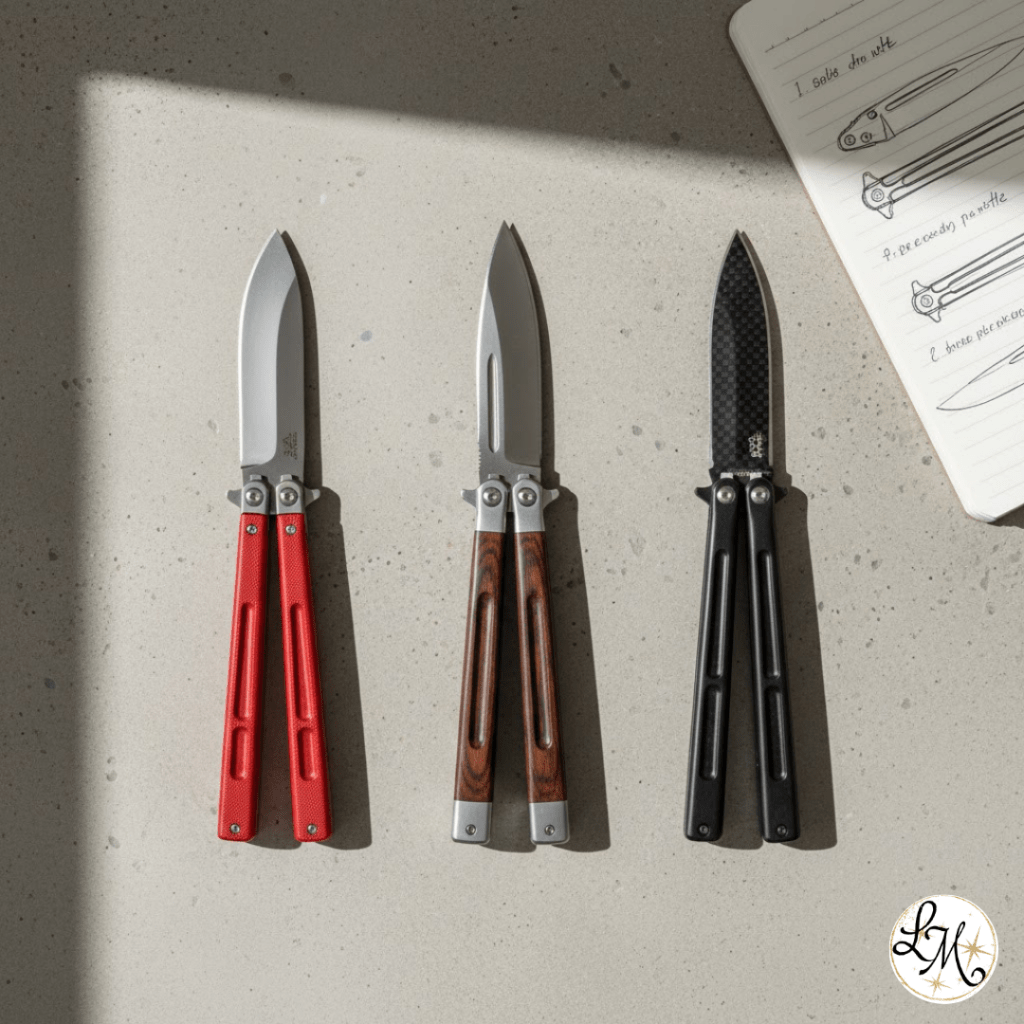
- Clip point options have a narrow, tapered tip that offers better control for precise cuts. They often work well for everyday tasks where accuracy matters, such as light utility work at home.
- Bayonet-style stands out for its symmetrical and bold appearance. While visually appealing, they are usually better suited for casual handling or flipping practice rather than frequent cutting.
- Spear point blades tend to work best for travel. Their centered tip and balanced shape make them feel stable and predictable, which helps when packing, carrying, and occasional use on the go.
Choosing a blade style that matches how you plan to use the knife helps ensure it feels practical and comfortable, not just interesting at first glance.
Closing Lines
A butterfly knife can be a rewarding addition to everyday life, whether it is used for simple utility, practiced for skill, or appreciated for its design. Taking time to consider length, quality, and blade style helps ensure the choice feels thoughtful rather than rushed. When the knife fits your lifestyle and routine, it becomes something you enjoy using and carrying, not something you constantly have to adjust around.
What are your thoughts about the 3 Things to Know Before Buying a Butterfly Knife for Travel or Everyday Carry Please share in the comments below. I really would love to know.
Until next time, shine amongst the stars!
‘This post may contain affiliate links


If you haven’t made enough money blogging, look into taking the
Complete Guide to Make Money Blogging for only
($10… WOW 95% Off for a limited time).


Thinking about buying a butterfly knife? Before you choose one for travel or everyday carry, here are 3 important things to know so it fits your routine and feels practical long term. 🔪✨ ❤️ #LavandaMIchelle