


If you have noticed your favorite pair of jeans fitting a bit snugger around your waistline lately, please take a deep breath. It’s real. It’s common. And you’re not alone.
Many women find that during perimenopause and menopause, their bodies begin storing weight in places it never used to—specifically around the midsection. This shift often leaves women feeling deeply frustrated, especially when their diet and exercise routines haven’t changed.
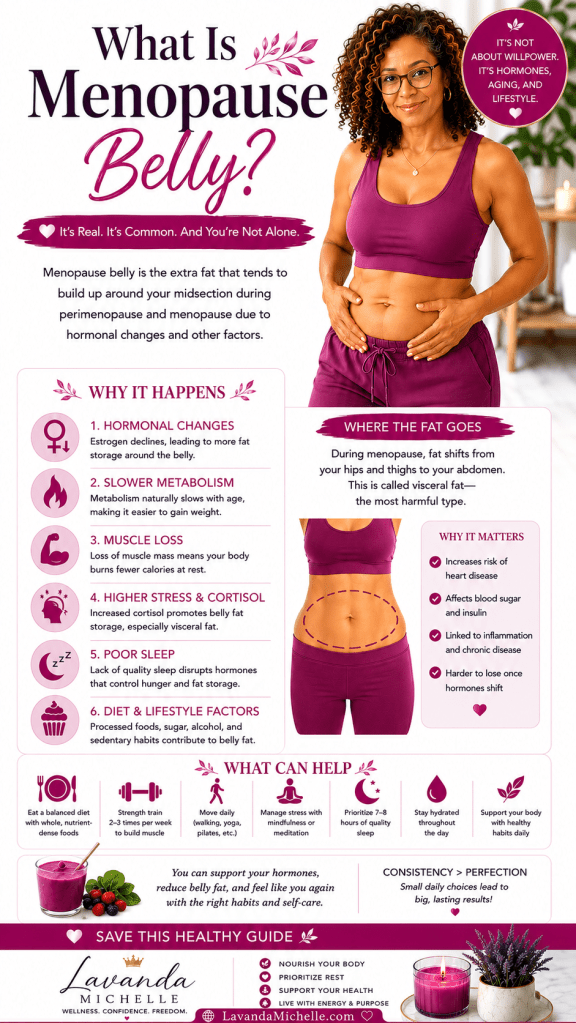
The most important thing to understand right now is that this isn’t a failure of willpower. It is a biological response to changing hormone levels, natural aging, and lifestyle adjustments. Let’s pull back the curtain on what “menopause belly” actually is, why it matters, and how you can naturally support your body through this transition.


Why It Happens: The Core Culprits
Menopause belly refers to the stubborn, extra fat that tends to build up around the midsection during the menopausal transition. It happens due to a combination of several overlapping internal factors:
1. Hormonal Changes
As you navigate midlife, your baseline estrogen levels begin a natural and steady decline. This specific hormonal drop signals a major change in how your body handles energy, frequently leading to increased fat storage directly around the stomach.
2. A Slower Metabolism
Your metabolic rate naturally loses speed as you celebrate more birthdays. A naturally slowing metabolism means your body requires slightly fewer calories to operate, making it significantly easier to notice gradual weight gain if your daily habits stay exactly the same.
3. Muscle Loss
Starting in our 30s and accelerating into our 40s and 50s, women experience a natural loss of lean muscle mass. Because muscle tissue is highly active, losing it means your body inherently burns fewer total calories when you are completely at rest.

4. Higher Stress & Cortisol
Midlife can bring unique stressors, triggering your body to pump out more of the stress hormone known as cortisol. Elevated, chronic cortisol is a massive driver for abdominal fat storage—specifically encouraging the development of visceral fat.
5. Poor Sleep Quality
Tossing and turning does more than just make you groggy. A chronic lack of quality, restorative sleep deeply disrupts the delicate hormones that control your daily hunger signals, sugar cravings, and metabolic fat storage.
6. Diet & Lifestyle Factors
An over-reliance on highly processed convenient foods, refined sugars, frequent alcohol intake, and spending too much time sitting down all compound over time, heavily contributing to stubborn midsection changes.

Where the Fat Goes (And Why It Matters)
During our reproductive years, estrogen typically directs fat to be stored on our hips, thighs, and buttocks. However, as those hormone levels drop, the body physically shifts its fat distribution centers directly to the abdomen.
This new abdominal accumulation is primarily visceral fat—a type of fat that wraps around your internal organs. Unlike subcutaneous fat (the soft fat you can pinch just beneath the skin), visceral fat is metabolically active and requires careful attention.
Why Managing Visceral Fat Matters:
- Cardiovascular Health: It significantly increases the baseline statistical risk of heart disease.
- Metabolic Function: It actively impacts healthy blood sugar levels and can lead to insulin resistance.
- Systemic Inflammation: It is closely linked to low-grade cellular inflammation and chronic systemic conditions.
- Weight Loss Resistance: It alters your internal chemistry, making it notably harder to shed once your hormone levels shift.

What Can Help: Your Action Blueprint
While you cannot stop your hormones from shifting, you have immense power over how you respond to those shifts. You can fully support your endocrine system, reduce visceral fat accumulation, and start feeling like yourself again by anchoring into these foundational daily habits:
- Eat a Balanced Diet: Fill your plate with whole, nutrient-dense foods, prioritizing high-quality clean proteins, healthy dietary fats, and a rich variety of colorful vegetables.
- Strength Train Consistently: Dedicate time to lift weights or perform resistance training 2–3 times per week to rebuild lost muscle mass and rev up your resting metabolism.
- Prioritize Daily Movement: Keep your body active outside of structured workouts with low-impact, stress-reducing movement like daily walking, yoga, or Pilates.
- Manage Stress with Mindfulness: Protect your nervous system from cortisol spikes by integrating dedicated mindfulness or meditation practices into your weekly schedule.
- Lock In Your Rest: Treat your sleep schedule as a non-negotiable priority, aiming for 7–8 hours of uninterrupted, quality sleep every single night.
- Stay Hydrated: Drink plenty of pure water throughout your day to actively support your digestion, skin health, and natural cellular detoxification pathways.

Consistency Over Perfection
Navigating menopause belly isn’t about forcing yourself into restrictive, punishing diets. True wellness relies on a powerful rule: Consistency > Perfection. Small, loving, and intentional choices made day after day lead to big, beautifully lasting results for your body and mind.
Nourish your unique body, give yourself grace through the transitions, and commit to living your life with vibrant purpose. You deserve to feel strong, radiant, and completely at home in your skin!

Medical Disclaimer
Please Note: The information provided on this platform, including all text, graphics, and infographics, is for educational and informational purposes only. It is not intended to be a substitute for professional medical advice, diagnosis, or treatment. Always seek the advice of your physician, endocrinologist, or another qualified healthcare provider with any questions you may have regarding abdominal weight distribution or metabolic health changes.
Authoritative Medical Resources
To read further into the clinical research regarding visceral fat accumulation, cortisol pathways, and female metabolic shifts during perimenopause, you can explore these global organizations:
- The Endocrine Society: Provides excellent public educational materials and peer-reviewed research on estrogen loss, metabolic disorders, and abdominal fat distribution.
- The North American Menopause Society (NAMS): Offers clinical consensus data surrounding midlife body composition changes, muscle loss, and targeted non-pharmaceutical lifestyle strategies for menopausal women.
- Mayo Clinic: Features extensive patient education articles detailing the direct cardiovascular impacts of visceral fat and practical advice on resistance training for aging metabolic health.

What are your thoughts about What Is Menopause Belly? (Why It Happens & How to Handle It) Please share in the comments below. I really would love to know.
Until next time, shine amongst the stars!
‘This post may contain affiliate links
If you haven’t made enough money blogging, look into taking the
Complete Guide to Make Money Blogging for only
($10… WOW 95% Off for a limited time).

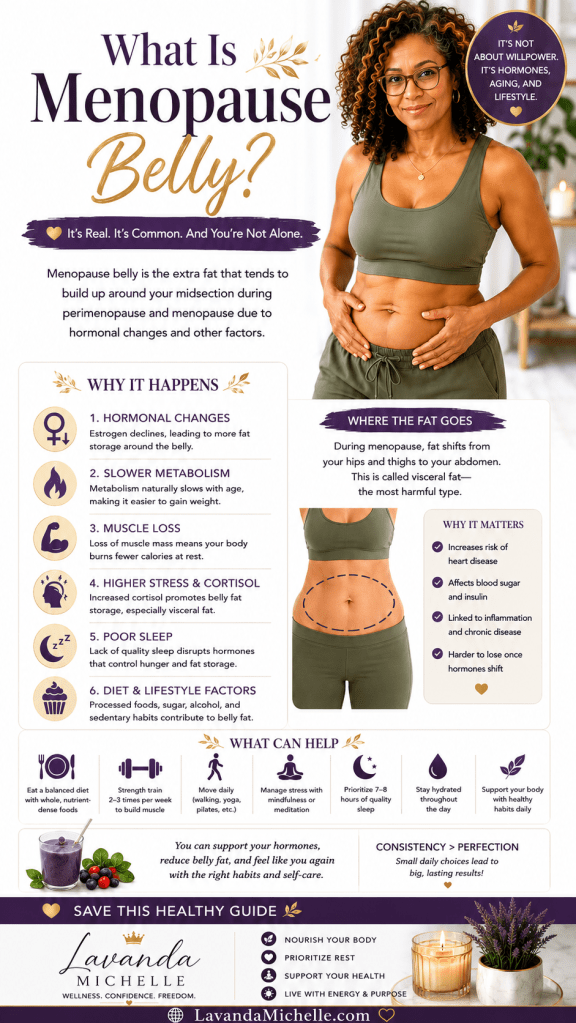
Frustrated by midsection changes? 🌿 It’s not about willpower—it’s hormones, aging & lifestyle. Discover what menopause belly actually is, why visceral fat matters & how to handle it naturally. #LavandaMichelle

