


I recently came across this on the news while I was in the hospital, and it immediately caught my attention. It made me want to learn more and share what I found in a way that feels simple, clear, and helpful.
If you’ve ever cleaned out a dusty shed, opened an old storage box, or gone camping in a rural area, there’s a hidden health risk you may not have thought about: hantavirus.
While rare, hantavirus infections can be extremely serious—and even deadly—if not recognized early. The good news? With the right knowledge and precautions, you can significantly reduce your risk.
Here’s everything you need to know.


What Is Hantavirus?
Hantaviruses are a group of viruses carried by rodents, especially deer mice in the United States. These animals don’t get sick from the virus, but humans can develop a severe condition called Hantavirus Pulmonary Syndrome (HPS).
HPS affects the lungs and can progress rapidly. Even with medical care, it has a fatality rate of around 30–40%, which is why awareness and early action are so important.

How Hantavirus Spreads
Hantavirus doesn’t spread through casual contact with other people. In North America, it’s primarily transmitted through exposure to infected rodents.
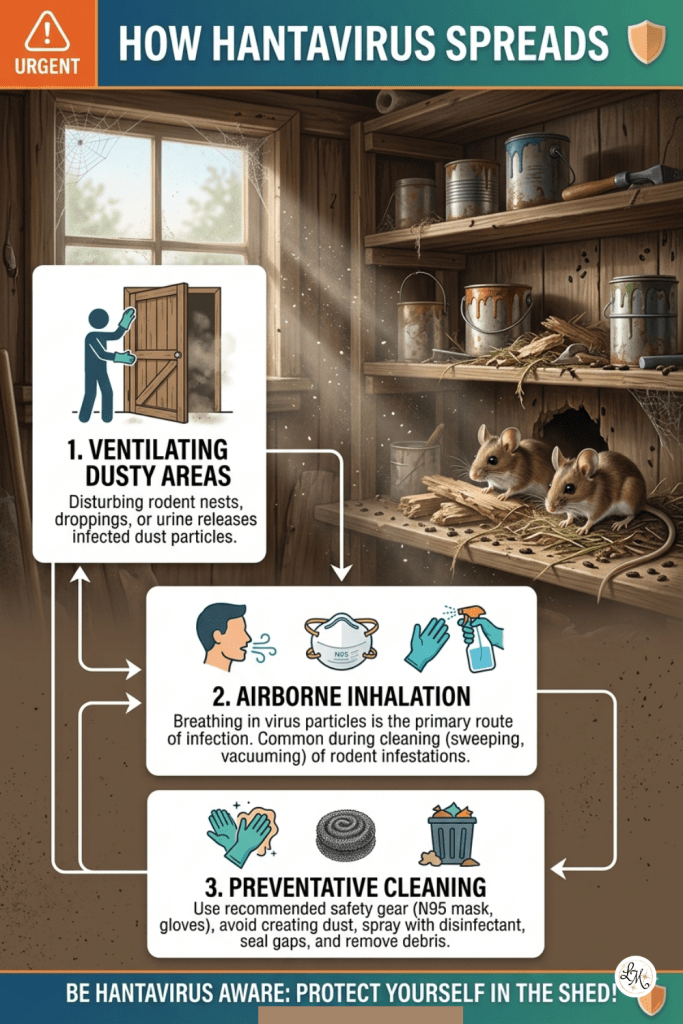
The most common way people get infected is through a process called aerosolization:
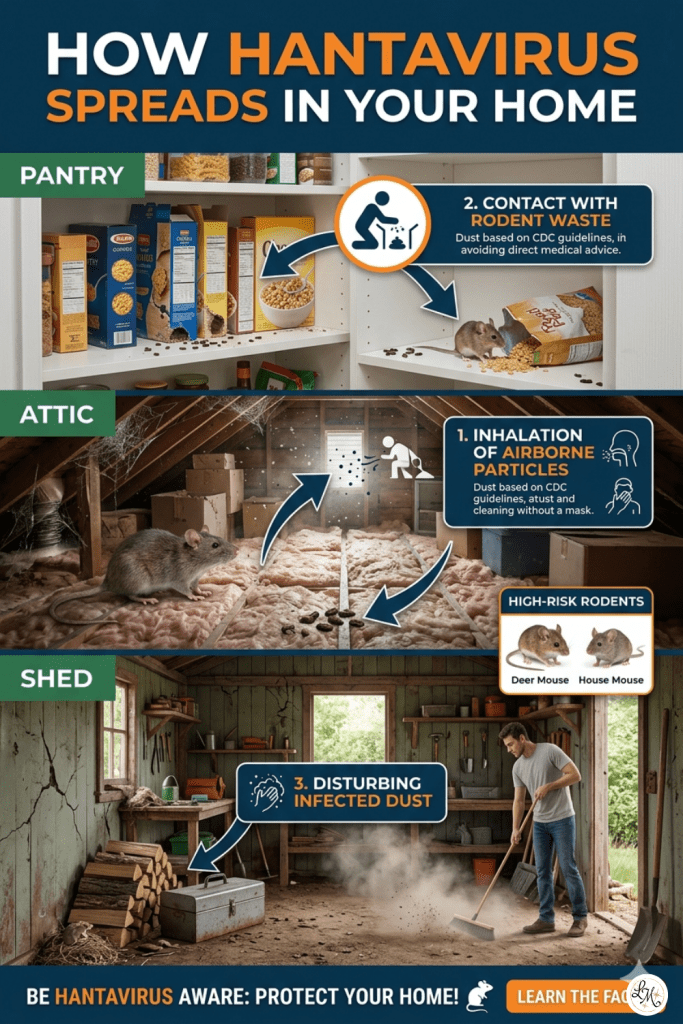
When dried rodent urine, droppings, or nesting materials are disturbed, tiny virus particles can become airborne. If you breathe in that contaminated dust, the virus can enter your body.
Other possible (but less common) transmission routes include:
- Touching contaminated surfaces and then touching your face
- Rodent bites
High-risk situations often include:
- Cleaning out sheds, barns, or cabins
- Working in attics or crawlspaces
- Opening buildings that have been closed for long periods
- Camping or staying in rodent-prone areas
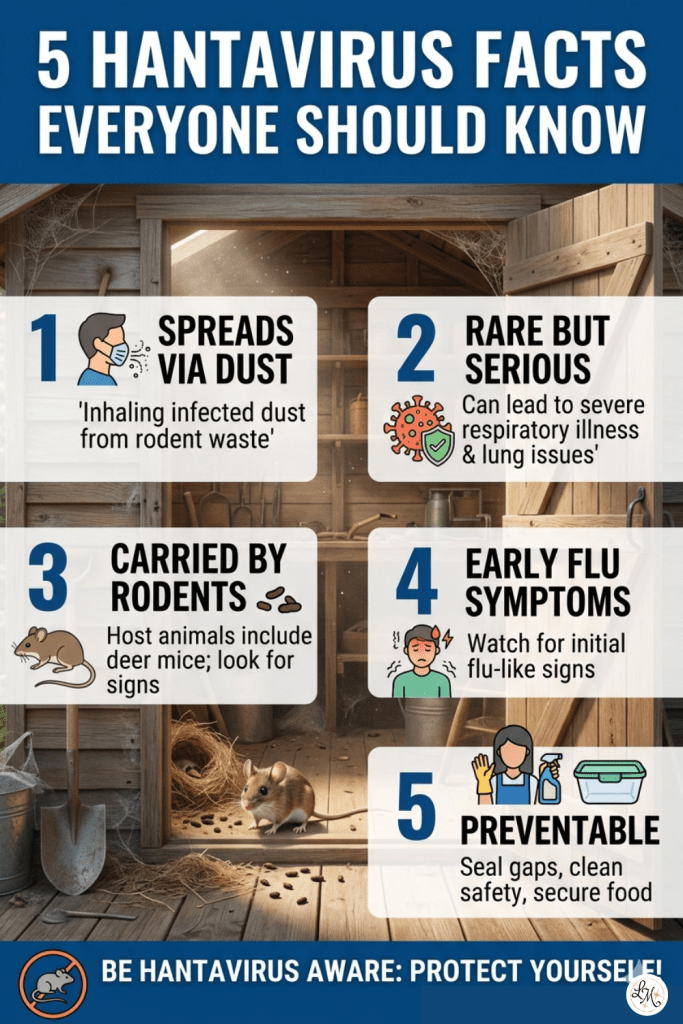
Symptoms: Starts Like the Flu, Turns Serious Fast
One of the most dangerous aspects of hantavirus is how it begins—it often feels like a mild illness before becoming severe.
Early symptoms (1–8 weeks after exposure):
- Fever
- Intense muscle aches (especially thighs, hips, and back)
- Fatigue
- Chills and dizziness
- Headaches
- Sometimes nausea or vomiting
Then, within a few days, symptoms can escalate rapidly.
Late-stage symptoms (Hantavirus Pulmonary Syndrome):
- Persistent coughing
- Severe shortness of breath
- Fluid buildup in the lungs
At this stage, it becomes a medical emergency. If you’ve had possible rodent exposure and develop these symptoms, seek care immediately and tell your doctor about the exposure.
Who Is Most at Risk?
While hantavirus cases can occur anywhere in the U.S., they are more common in the Southwest. However, risk depends more on exposure than location.
You may be at higher risk if you:
- Clean or work in enclosed spaces with rodent activity
- Handle stored items in garages, sheds, or barns
- Spend time in rural or wilderness areas
- Live in or visit homes with known rodent infestations
How to Protect Yourself: Seal, Trap, Clean
Prevention is simple but must be done correctly. Follow this three-step approach:
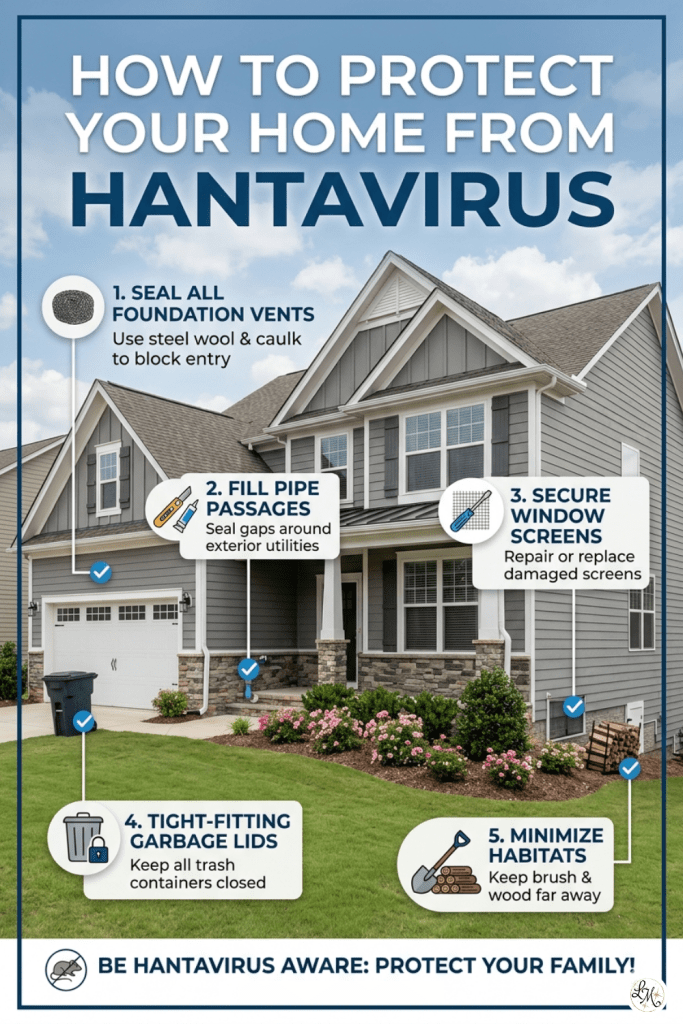
Seal up
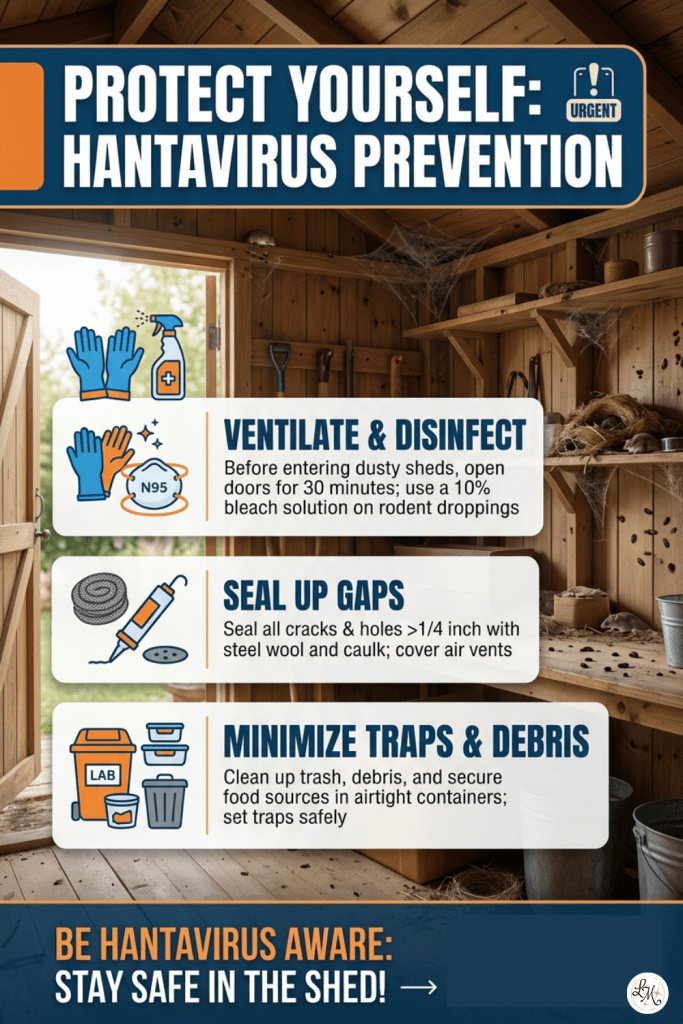
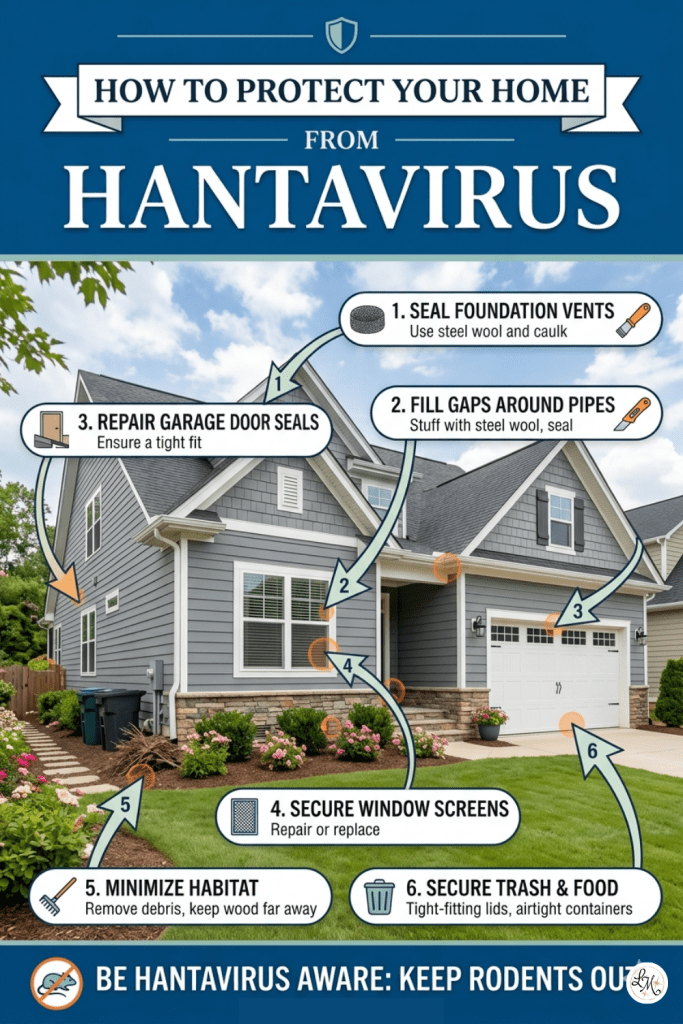
Block any openings larger than a quarter inch using materials like steel wool and caulk. Check around doors, windows, pipes, and vents to keep rodents out.
Trap up
Use snap traps to reduce rodent populations. Avoid sweeping or vacuuming droppings, as this can release harmful particles into the air.
Clean up safely
Before cleaning, ventilate the area for at least 30 minutes. Then:
- Spray droppings and surfaces with a disinfectant (such as a bleach solution)
- Let it sit for at least 5 minutes
- Wear gloves and use paper towels to wipe everything up
- Dispose of waste in a sealed bag
- Wash your hands thoroughly afterward
For extra protection, consider wearing a mask (like an N95) when cleaning heavily contaminated areas.

A Real-Life Example
Imagine opening a shed that hasn’t been touched in months. You grab a broom and start sweeping, kicking up dust without realizing it contains rodent droppings. A few weeks later, you develop flu-like symptoms that suddenly worsen into breathing problems.
That’s exactly how many hantavirus cases begin.
The Bottom Line
Hantavirus is rare—but serious. The biggest risk comes from unknowingly disturbing contaminated dust in areas where rodents have been active.
By taking simple precautions like sealing entry points, using proper cleaning methods, and recognizing early symptoms, you can protect yourself and your family.
And if you ever experience flu-like symptoms after possible exposure, don’t wait—seek medical care right away. Early treatment can save your life.

Recent 2026 cruise ship cases show vigilance matters everywhere. Stay prepared!
Until next time, shine amongst the stars!
‘This post may contain affiliate links
If you haven’t made enough money blogging, look into taking the
Complete Guide to Make Money Blogging for only
($10… WOW 95% Off for a limited time).
Just saw this in the hospital and had to share. Hantavirus can start like the flu but turn serious fast. Learn the symptoms, how it spreads, and how to protect yourself in my latest article. #Hantavirus #HealthAwareness #PublicHealth #StaySafe #LavandaMichelle

