



People often talk about traditions as though they’re just going to carry on forever on their own, but the fact is that most traditions only survive because generation after generation keep choosing to practice them, protect them, and pass them along. Without that effort, even very old traditionals can slowly disappear quite quickly, and once they’re gone, they’re pretty much gone forever. With that in mind, keep reading to find out more about why some traditions need active support to survive.


History Alone Doesn’t Keep Traditions Alive
There are places in the world filled with history, churches, communities, languages, crafts, and customs that have existed for literally centuries, but the truth is that history itself just isn’t enough to guarantee they’re going to survive for centuries to come.
Communities definitely still need support, and people still need opportunities to stay, work, raise families, and continue their daily life there. The problem is that once those foundations get weaker, traditions tend to become lost because there are so many more pressing things to think about.


Modern Life Changes Communities Quickly
Things like economic pressure, conflict, tourism, migration, and politics can all change communities so they’re something entirely new and different, even if no one actually wants that to happen at all.
The fact is that younger generations often leave areas where there aren’t many opportunities, and that means that traditions have fewer people carrying them out, until there’s no one left who remembers them. Eventually, certain customs, crafts, or ways of living just get harder to maintain because the communities themselves get a lot smaller.

Faith Communities Face The Same Challenges
Religious traditions are also affected by these things, and although you might think of culture first, religion has certainly suffered over the years as things have changed for various reasons.
You might find that places that once supported a big and active faith community now struggle because the population is smaller or circumstances make it more difficult for local families. And because these communities also tend to have deep historical importance, people outside those religions might just assume all is well and that nothing bad could happen. However, the reality is that a lot of historic Christian communities in the Holy Land, for example, are facing real modern pressures linked to economic stability and long-term survival.
The good news is that organisations like Melior Mundus is devoted to keeping Christianity alive and well in the Holy Land, and you can find out more here https://meliormundus.com/.
Traditions Need To Stay Part Of Everyday Life
One of the biggest differences between traditions that survive and the ones that fade away is whether people are still actively doing them, because once something becomes purely symbolic or only exists for tourists or special occasions, it tends to start losing any form of connection to the community that it might once have had.
In the end, traditions are always going to be strongest when they’re part of ordinary routines, family life, celebrations, work, and perhaps even local identity when you think about it, rather than just existing as part of history.

What are your thoughts about Why Some Traditions Need Active Support to Survive Please share in the comments below. I really would love to know.
Until next time, shine amongst the stars!
‘This post may contain affiliate links


If you haven’t made enough money blogging, look into taking the
Complete Guide to Make Money Blogging for only
($10… WOW 95% Off for a limited time).
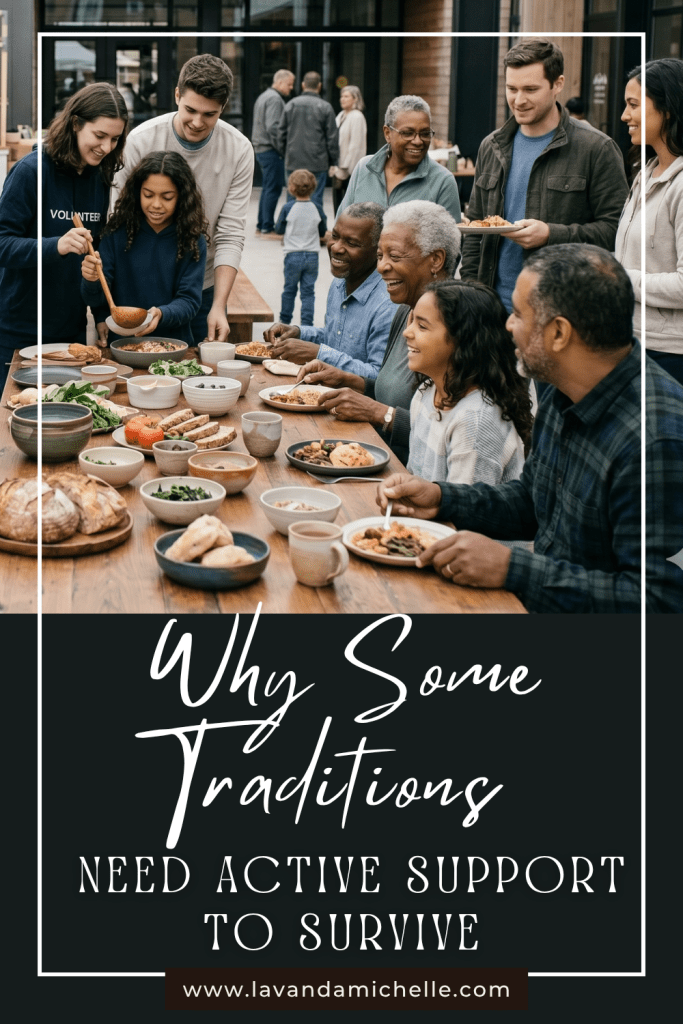


Traditions don’t survive on history alone—they require active choices across generations. From economic shifts to migration, discover why traditions fade and how we can protect living heritage: #Culture #History #Community

