

When something goes wrong, most people assume help is only minutes away. But during severe storms, power outages, or large-scale emergencies, response times can be delayed—or unavailable altogether.
The reality is simple: a standard drugstore first aid kit is designed for minor injuries, not life-threatening situations.
If you want to be truly prepared, your emergency home medical kit should allow you to control bleeding, reduce infection risk, and stabilize injuries until professional care is available.

Trauma & Wound Care (Critical Response)
These tools are designed for severe emergencies where immediate action can save a life.
- Tourniquet (CAT or SOFTT-W) – Essential for stopping life-threatening bleeding in limbs. Avoid counterfeit versions.
- Pressure Dressings (Israeli Bandage) – Provides sustained pressure to control heavy bleeding.
- Hemostatic Gauze (QuikClot or similar) – Promotes rapid clotting in deep wounds.
- Vented Chest Seals – Helps prevent lung collapse from penetrating chest injuries.
- Trauma Shears – Cuts through clothing, gear, or seatbelts quickly.
- Nitrile Gloves – Protects both the patient and caregiver from contamination.
- Plastic Wrap (Burn Dressing) – A simple, non-stick barrier that protects burns and reduces pain.
Infection Prevention & Basic Care
Without proper care, even small wounds can become serious in an emergency.
- Hand Sanitizer (60%+ alcohol) – Critical when clean water is unavailable.
- Antibiotic Ointment – Helps prevent infection in minor wounds.
- Alcohol Prep Pads – Cleans skin and tools before treatment.
- Sterile Gauze Pads & Medical Tape – For dressing and protecting wounds.
- Elastic Bandages (ACE Wraps) – Supports sprains and soft tissue injuries.
- Thermometer – Helps monitor fever when medical care is delayed.
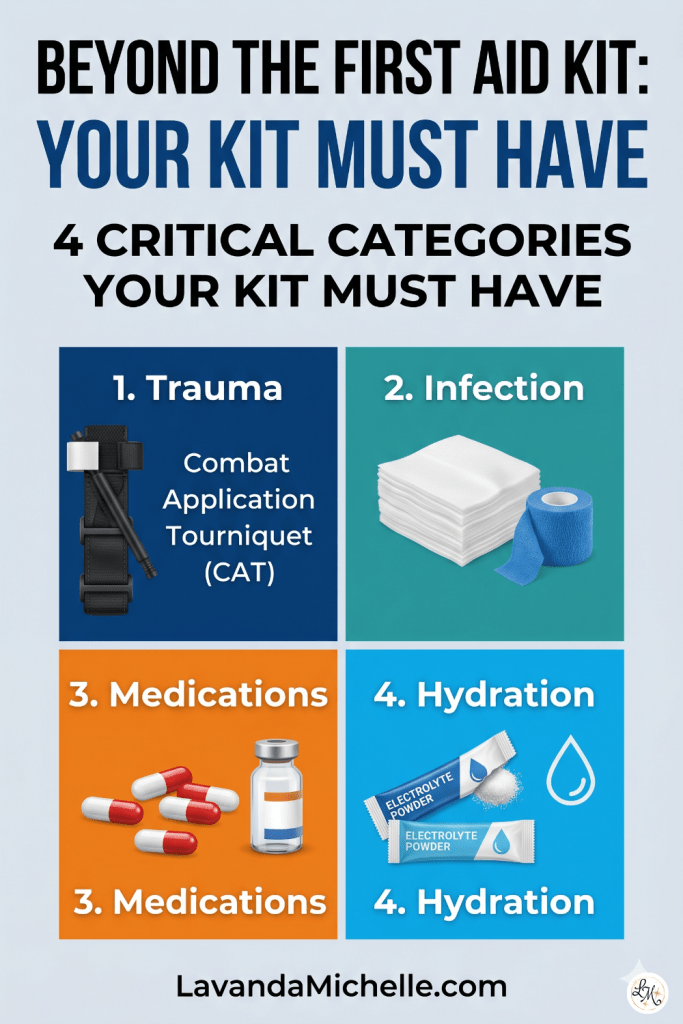
Medications & Hydration
These essentials help manage common but potentially dangerous conditions.
- Loperamide – Controls diarrhea and helps prevent dehydration.
- Aspirin – Useful for pain, fever, and certain cardiac emergencies (when appropriate).
- Antihistamines – Helps manage allergic reactions.
- Electrolyte Packets – Replaces fluids and minerals lost through illness or exertion.
Additional High-Value Tools
These items expand your ability to handle a wider range of situations.
- Pulse Oximeter – Tracks oxygen levels during respiratory distress.
- Tweezers (Precision) – Removes debris, splinters, or glass from wounds.
- Irrigation Syringe (30–60cc) – Flushes wounds to reduce infection risk.
- Triangular Bandages – Versatile for slings, wraps, or padding.
- Self-Adherent Wrap (Cohesive Bandage) – Secures dressings without sticking to skin.

How to Store Your Kit
Your emergency home medical kit should be easy to access and ready to go at a moment’s notice.
- Store items in a durable, clearly labeled bag or container
- Keep it in a central, known location
- Check supplies every 6–12 months for expiration dates
- Consider building a second, smaller kit for your car
Avoiding Counterfeit Medical Supplies
Not all medical gear is created equal—especially online.
- Buy from trusted retailers or medical supply companies
- Be cautious of extremely low prices on critical items like tourniquets
- Look for verified brands (CAT, SOFTT-W, QuikClot)
- Read reviews and check seller credibility
A Note on Readiness
Having the right tools is only half the equation—knowing how to use them is what truly saves lives.
Take a certified First Aid, CPR, or “Stop the Bleed” course. Practice your skills regularly, and make sure every adult in your household knows where your kit is stored and how to use it.
Medical Disclaimer:
This content is for informational and educational purposes only and is not a substitute for professional medical advice, diagnosis, or treatment. Always seek guidance from a qualified healthcare provider for medical concerns. In an emergency, call 911 immediately. Use medical tools and supplies only if you are properly trained.
What are your thoughts about Beyond the First Aid Kit: 22 Medical Essentials for Emergencies Please share in the comments below. I really would love to know.
Until next time, shine amongst the stars!
‘This post may contain affiliate links


If you haven’t made enough money blogging, look into taking the
Complete Guide to Make Money Blogging for only
($10… WOW 95% Off for a limited time).


A basic Band-Aid won’t cut it in an emergency. 🚑 Is your home medical kit ready for the real thing? Learn the 20 vital medical tools—from trauma gear to infection control—every household needs to stay safe when help is delayed. #FirstAid #Preparedness ✨✨ ❤️ #LavandaMIchelle
