
When a child is in the middle of a major emotional breakdown, throwing a tantrum, or pushing household boundaries, our natural reaction as parents is often born out of sheer exhaustion. In the heat of the moment, quick reactive statements like “Stop crying!” or “Because I said so!” can easily slip out.
While these knee-jerk responses are completely understandable, they rarely achieve the long-term goal of teaching our kids how to manage their emotions and choices.
Positive discipline isn’t about letting go of rules or allowing children to run the house without consequences. It is about setting firm, loving boundaries while preserving emotional connection and mutual respect. Swapping reactive phrases for calm, intentional alternatives helps de-escalate tension instantly and teaches kids how to self-regulate. Here are 10 positive discipline phrases that work to help you guide your family with grace and confidence!
💛 Why Positive Discipline Phrases Work
Shifting the language you use during challenging moments transforms the entire dynamic in your home sanctuary:
- Builds Connection & Trust: Communicates safety and emotional support rather than fear.
- Encourages Good Behavior: Focuses on what children should do instead of just reprimanding them.
- Helps Kids Understand Better: Offers clear, actionable guidance instead of vague demands.
- Supports Emotional Growth: Teaches lifelong emotional regulation and healthy communication skills.
🗣️ 10 Simple Phrase Swaps for Everyday Moments
1. Address Big Feelings
- Instead of: “Stop crying!”
- Say: “I’m here. Tell me what happened.”
- Why It Works: Telling a child to stop crying invalidates their emotional experience and often causes them to double down. Reassuring them that you are present creates a safe emotional harbor, allowing them to calm down enough to express what is bothering them.

2. Offer Explanation Over Authority
- Instead of: “Because I said so.”
- Say: “Let me explain why.”
- Why It Works: While parents hold the ultimate decision-making authority, taking ten seconds to briefly explain the reasoning behind a boundary helps kids learn cause-and-effect thinking and builds respect rather than resentment.
3. Separate the Child from the Behavior
- Instead of: “You’re being bad.”
- Say: “That choice wasn’t okay.”
- Why It Works: Labeling a child as “bad” damages their self-esteem and makes them internalize negative traits. Labeling the choice as unacceptable teaches them that they are inherently good people who simply made a mistake they can fix.
4. Co-Regulate Instead of Isolating
- Instead of: “Go away.”
- Say: “Let’s take a calm break together.”
- Why It Works: Sending an overwhelmed, dysregulated child away to isolation often increases their anxiety. Inviting them into a shared, quiet “calm break” helps them regulate their nervous system alongside your peaceful energy.

5. Turn Urgency into Play
- Instead of: “Hurry up!”
- Say: “Let’s race to get ready.”
- Why It Works: Repeatedly yelling “hurry up” creates panic and resistance. Reframing a necessary transition into a lighthearted, playful challenge turns a potential battle of wills into a fun, cooperative game.
6. Guide the Vocal Tone
- Instead of: “No yelling!”
- Say: “Use your calm voice.”
- Why It Works: Yelling “No yelling!” is counterproductive. Children process positive directives much faster than negative commands; telling them explicitly what volume to use gives them a clear target to aim for.
7. Set Clear Physical Boundaries
- Instead of: “Stop that now!”
- Say: “Safe hands, please.”
- Why It Works: Vague demands like “stop that” leave room for confusion during high-energy moments. Reminding them to use “safe hands” sets a gentle, clear boundary around physical behavior without triggering defensiveness.
8. Focus on Eye Contact and Listening
- Instead of: “You never listen.”
- Say: “Look at me so I know you hear me.”
- Why It Works: Absolute statements like “you never listen” build resentment and shut down communication. Asking for direct eye contact gently grounds their focus and ensures your message is being received.

9. Normalize Emotional Expressions
- Instead of: “Big kids don’t cry.”
- Say: “It’s okay to feel upset.”
- Why It Works: Telling kids not to cry teaches them to suppress their feelings. Reassuring them that feeling upset is completely normal gives them permission to process emotions in a healthy, open way.
10. Frame Noise Controls Positively
- Instead of: “Be quiet.”
- Say: “Let’s use indoor voices.”
- Why It Works: Directives like “be quiet” can feel harsh and restrictive. Inviting them to use their “indoor voice” teaches spatial awareness and proper social boundaries in a calm, respectful manner.
You Don’t Need Perfect Words. You Need Kind Words. 🤍
Which phrase swap are you going to try out in your home this week? Let’s parent with purpose, patience, and clear intentions together!

What are your thoughts about 10 Positive Discipline Phrases That Actually Work: Kind Words Today, Strong Kids Tomorrow Please share in the comments below. I really would love to know.
Until next time, shine amongst the stars!
‘This post may contain affiliate links

If you haven’t made enough money blogging, look into taking the
Complete Guide to Make Money Blogging for only
($10… WOW 95% Off for a limited time).
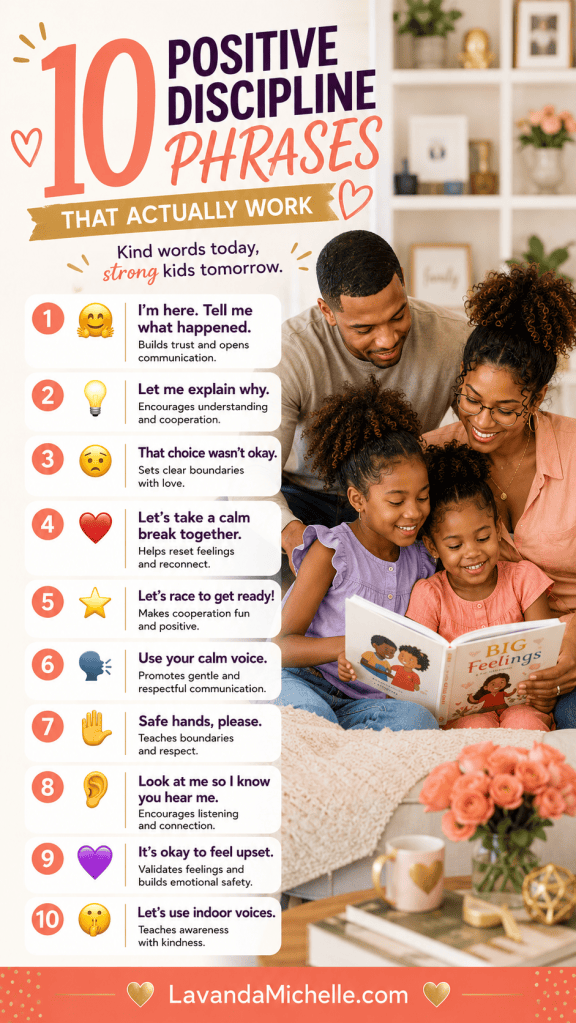
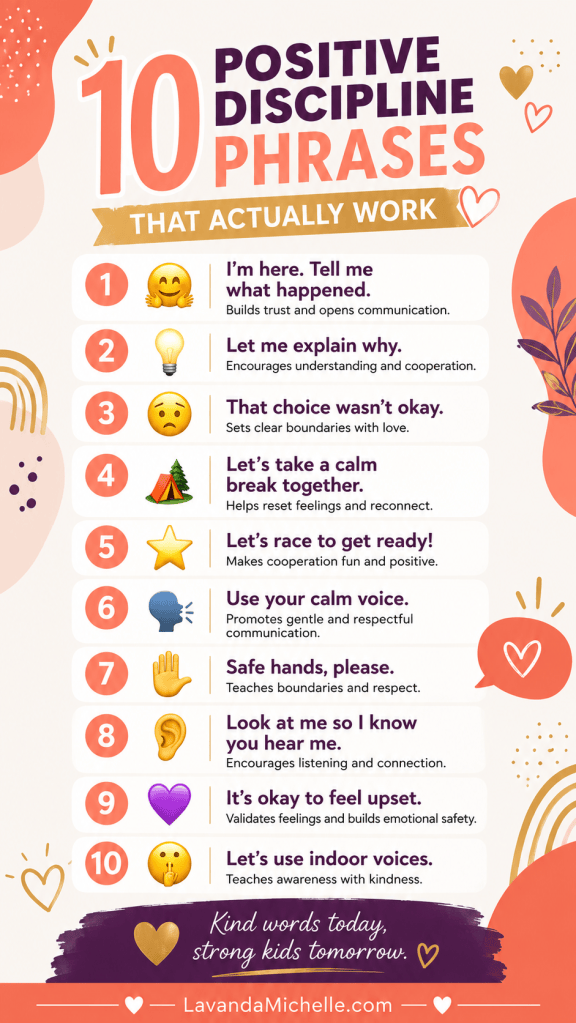
Kind words today, strong kids tomorrow! 💛✨ Swap out harsh reactions for 10 positive discipline phrases that actually work to de-escalate tantrums, set safe boundaries, & build deep trust with your kids: 🤍 #LavandaMichelle

