
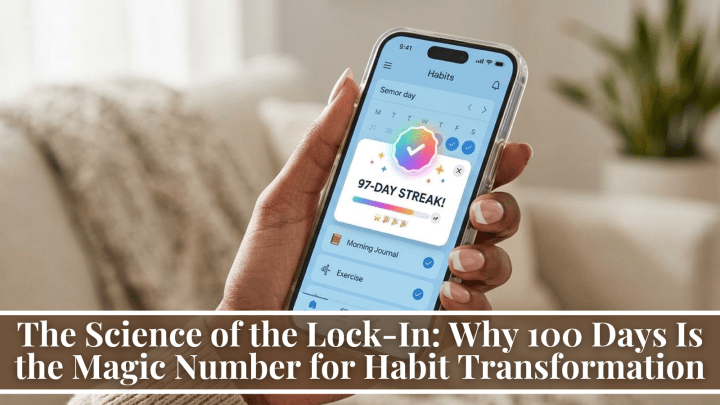
There’s something powerful about choosing a number and deciding, “I’m going all in.” For me, 100 days feels like that sweet spot where things stop being a quick burst of motivation and start becoming part of who you are. It’s long enough to see real change, but not so long that it feels impossible. And honestly, that matters… because a lot of people don’t fail from lack of desire, they fail because the goal feels too fuzzy, too huge, too easy to quit when life gets messy.
That’s where the lock-in comes in.
A 100-day lock-in gives your brain something concrete to hold onto. Instead of saying, “I need to get my life together,” you’re saying, “For the next 100 days, I’m focusing on this one thing.” That shift is small, but it changes everything. Suddenly, you’re not trying to be perfect forever. You’re just showing up today, then tomorrow, then the next day. And day by day, that starts to build momentum.
Why 100 days feels different
There’s a reason a challenge like this can feel more doable than an open-ended goal. Your brain likes structure. It likes checkpoints. It likes knowing there’s an end point, especially when the task feels hard. One day is easy to ignore. One week can still feel like a warm-up. But 100 days? That feels serious. That feels like a real commitment.
And the funny thing is, once you’ve done something long enough, it starts to feel more normal. At first, drinking more water, walking every day, eating more protein, or waking up earlier can feel like work. But after enough repetition, those things stop feeling like decisions you have to make every morning. They start feeling like part of your rhythm.
That’s the magic.
Not perfection. Repetition.

Habit change takes time
People love to say it takes 21 days to build a habit, but real life is usually a little messier than that. Habits don’t magically click into place on a certain day like flipping a switch. They get stronger through repetition, consistency, and a lot of unglamorous ordinary days. Some days feel easy. Some days feel like you’re dragging your feet through wet cement. Both still count.
That’s why 100 days is such a smart framework. It gives you room to be human. You can have off days, slow days, and imperfect days without throwing the whole thing away. You’re not asking for instant transformation. You’re asking for progress that has time to breathe.
And that matters because real change usually doesn’t happen in a straight line. It happens in layers. First your behavior changes. Then your routine changes. Then your identity starts changing too.
Why consistency matters more than motivation
Motivation is great… when it shows up. But motivation is moody. It disappears when you’re tired, stressed, bored, or overwhelmed. Consistency, on the other hand, doesn’t need to feel exciting. It just needs to be repeated.
That’s why a lock-in works so well. It takes the pressure off “feeling ready” every single day. You’re not waiting for a perfect mood or a burst of inspiration. You’re building a system. And systems are stronger than emotions.
This is one of the biggest lessons behind habit transformation. If you depend on motivation, you’ll always be vulnerable to bad days. But if you build a structure, you can keep moving even when the vibe is off. That’s how people make real change. Not with dramatic one-day effort, but with quiet repeated action.
The identity shift
The biggest transformation doesn’t always happen in the mirror first. Sometimes it happens in your mind.
At the beginning, you might say, “I’m trying to be healthier.” But after weeks of showing up, you start saying, “I’m someone who takes care of myself.” That shift is huge. Because once you start seeing yourself differently, your choices get easier. You’re no longer fighting your habits every second. You’re making decisions that match the person you’re becoming.
That’s why 100 days is more than a countdown. It’s a reset. A chance to prove to yourself that you can follow through. A chance to become the type of person who doesn’t quit the second things get inconvenient.
And let me tell you, that kind of confidence is built, not borrowed.

How to make 100 days work
If you want a lock-in to actually stick, keep it simple.
- Pick one main focus.
- Track it daily.
- Keep your goals clear.
- Make the plan realistic.
- Expect imperfect days.
The more complicated your challenge is, the harder it is to sustain. You do not need to overhaul your entire life in one shot. You just need one clear direction. Maybe that means more protein, more steps, better sleep, less mindless scrolling, or finally sticking to your meal prep. Whatever it is, make it specific enough that you can actually measure it.
And please don’t underestimate the power of tracking. There’s something motivating about seeing your own progress in black and white. It turns invisible effort into visible proof.
Why 100 days builds confidence
Confidence is a lot like a muscle. It grows when you keep promises to yourself.
Every time you follow through, even in a small way, you reinforce trust. You start believing, “Okay, I really can do hard things.” That belief changes your behavior in a deep way. You stop starting over every Monday. You stop waiting for the perfect time. You stop treating your goals like a hobby and start treating them like a commitment.
That’s the part people don’t talk about enough. A 100-day challenge isn’t just about losing weight or building routines. It’s about becoming someone you can rely on. And that kind of self-trust spills into everything else.
The real magic
So is 100 days a magical number? In a way, yes… but not because the number itself has power. It’s powerful because it gives you enough time to build rhythm, enough structure to stay focused, and enough repetition to create identity-level change.
That’s the real science of the lock-in. It’s not about grinding yourself into the ground. It’s about creating a container where change has room to happen. One day at a time. One choice at a time. One small win at a time.
And before you know it, you’re not just doing the habits anymore. You’re becoming the habit.
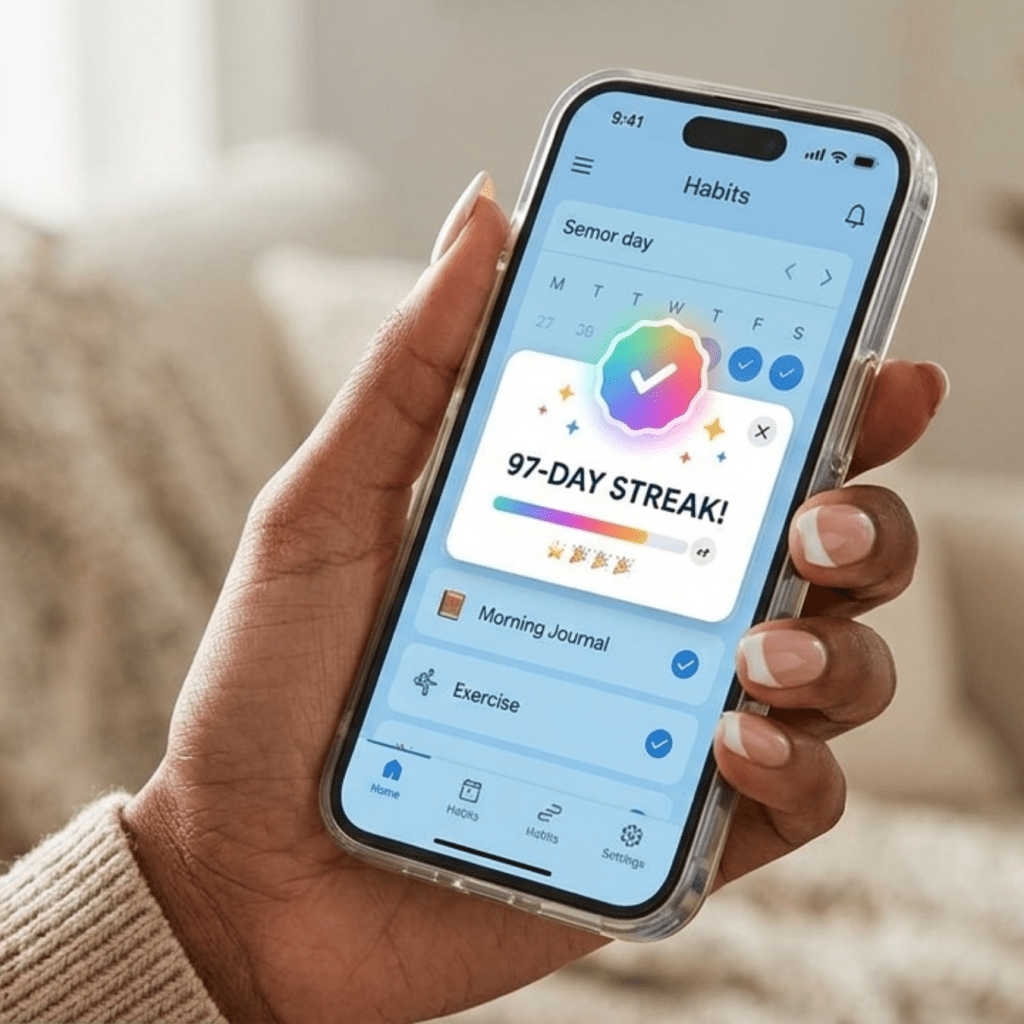
What are your thoughts about The Science of the Lock-In: Why 100 Days Is the Magic Number for Habit Transformations, Iwould love to know.
Until next time, shine amongst the stars!
‘This post may contain affiliate links

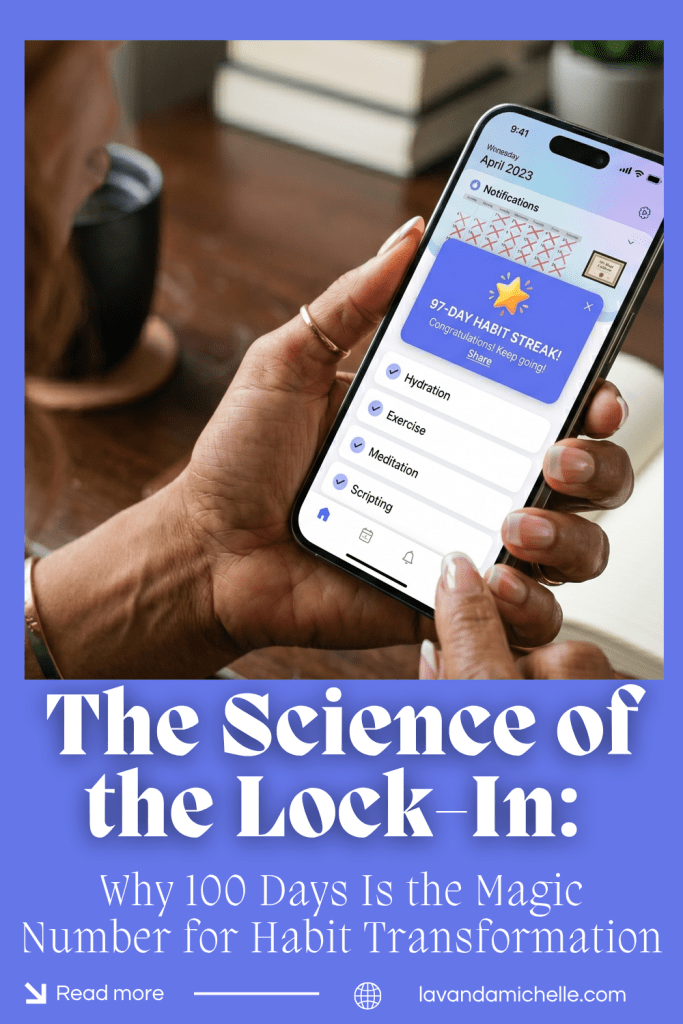
If you haven’t made enough money blogging, look into taking the
Complete Guide to Make Money Blogging for only
($10… WOW 95% Off for a limited time).
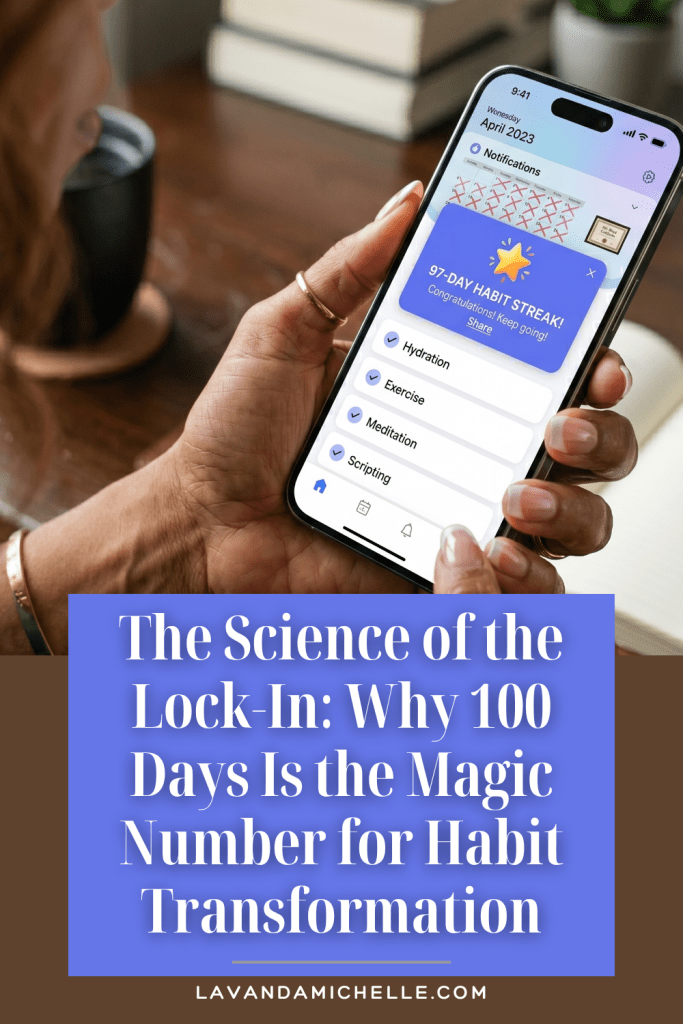
100 days can change everything if you stay consistent. In this new post, I’m breaking down the science of the lock-in, why habits stick, and how real transformation happens one day at a time. #habits #mindset #selfimprovement #LavandaMichelle

