

Your body is incredibly intelligent. It doesn’t just stop working without warning; instead, it leaves subtle clues when things are starting to shift out of alignment. For many women, learning to recognize these whispers is the very first step toward truly understanding and reclaiming your hormone health.
When your hormones are balanced, you feel vibrant, clear-headed, and energized. But when they are slightly off-kilter, it can feel like you’re operating with a low battery every single day.
If you’ve been feeling “off” lately, stop brushing it aside as just a normal part of being busy. Here are 10 common signs that your body is trying to tell you something important.
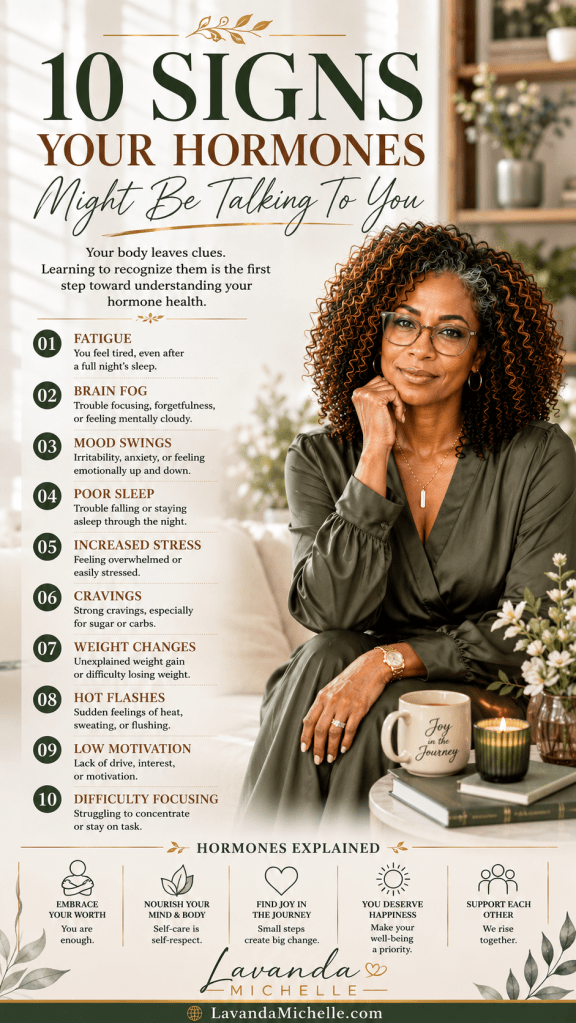
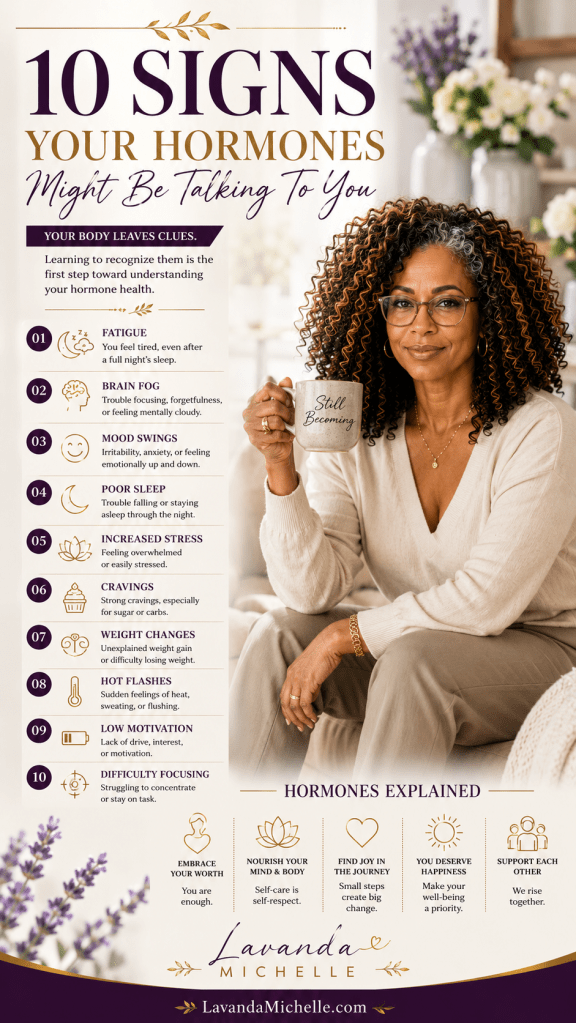
10 Common Signs of Hormone Imbalance
1. Fatigue
Do you wake up feeling just as exhausted as when your head hit the pillow the night before? Chronic fatigue that doesn’t improve with a full night’s rest is a classic indicator that your adrenal system or thyroid might be signaling for support.
2. Brain Fog
If you find yourself experiencing trouble focusing, sudden forgetfulness, or a pervasive feeling of being mentally cloudy, your hormones may be fluctuating. Estrogen and progesterone play massive roles in cognitive function and mental clarity.
3. Mood Swings
Feeling emotionally up and down without an obvious trigger can be incredibly frustrating. Unexplained irritability, sudden anxiety, or feeling like your emotions are on a roller coaster are often tied to shifting hormonal patterns.
4. Poor Sleep
Tossing and turning? Having trouble falling asleep or staying asleep through the night can quickly drain your quality of life. Imbalances in progesterone and cortisol are frequent culprits behind disrupted sleep cycles.
5. Increased Stress
If minor daily inconveniences leave you feeling completely overwhelmed or easily stressed, your body’s stress-response hormone, cortisol, might be firing on all cylinders, leaving your nervous system over-activated.
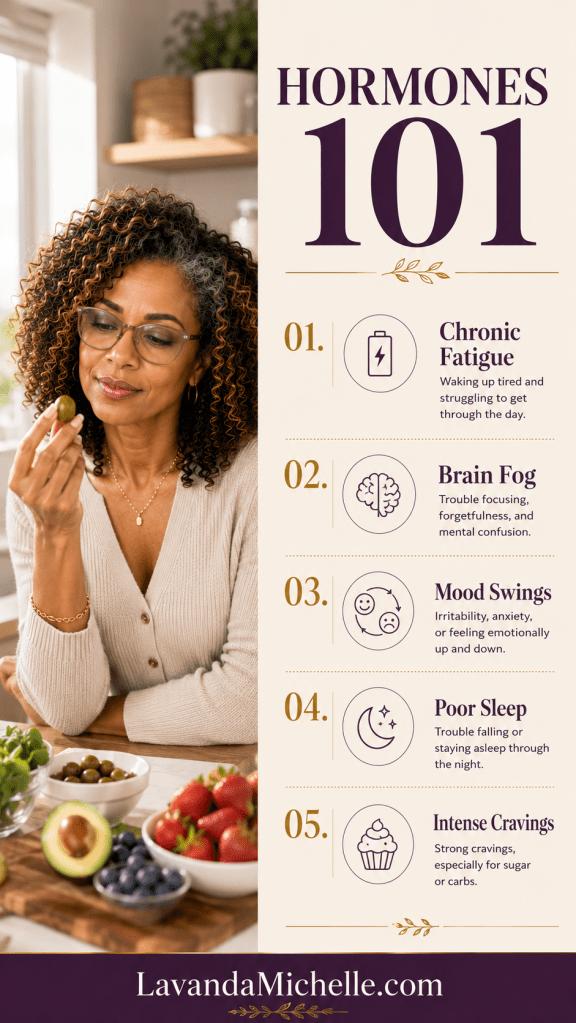
6. Intense Cravings
Giving into strong, urgent cravings—especially for sugary snacks, chocolate, or heavy carbohydrates—is rarely a matter of willpower. It’s often a physiological message that your insulin or cortisol levels are seeking balance.
7. Weight Changes
Unexplained weight gain, especially around the midsection, or finding it exceptionally difficult to lose weight despite maintaining a healthy routine can point directly to metabolic and hormonal shifts.
8. Hot Flashes
Sudden, intense feelings of heat, excessive sweating, or a flushed face aren’t just uncomfortable—they are your body’s temperature regulation system reacting directly to sudden drops in estrogen levels.
9. Low Motivation
A sudden lack of drive, decreased interest in your favorite hobbies, or low overall motivation can make you feel disconnected from yourself. When your hormone levels drop, your baseline drive often goes with them.
10. Difficulty Focusing
Struggling to concentrate on singular tasks or find yourself constantly distracted? When key regulatory hormones drop, staying on task can feel like an uphill battle.

Hormones Explained: Your Path Forward
Rebalancing your wellness isn’t about drastic, stressful overhauls. It’s about returning to foundational self-care with a gentle and compassionate mindset:
- Embrace Your Worth: Remember that you are enough, exactly as you are right now. Healing begins when you stop fighting your body and start listening to it.
- Nourish Your Mind & Body: Choosing to nourish yourself with whole foods, rest, and mindful movement isn’t a chore—true self-care is an act of self-respect.
- Find Joy in the Journey: You don’t have to fix everything overnight. Small, consistent steps in the right direction create massive, lasting change over time.
- You Deserve Happiness: Never apologize for making your health and well-being a non-negotiable priority in your daily schedule.
- Support Each Other: Wellness doesn’t happen in a vacuum. We rise together when we share our stories, normalise these conversations, and lift one another up.
Reclaiming Your Rhythm
Listening to your body isn’t about striving for perfection overnight; it’s about building a compassionate relationship with yourself. These symptoms are not flaws—they are simply messages guiding you to slow down, adjust, and give your nervous system the support it deserves. By tuning into these ten subtle clues, you are empowering yourself to move from a place of survival back into a state of vibrant alignment. Take a deep breath, honor the journey, and remember that making your well-being a priority is the greatest act of self-respect you can practice.
Medical Disclaimer
Please Note: The information provided on this platform, including all text, graphics, and infographics, is for educational and informational purposes only. It is not intended to be a substitute for professional medical advice, diagnosis, or treatment. Always seek the advice of your physician or other qualified healthcare provider with any questions you may have regarding a medical condition. Never disregard professional medical advice or delay in seeking it because of something you have read here.
The medical and wellness information compiled in this blog post framework is based on recognized clinical guidelines for endocrine and women’s health.
- The Endocrine Society: A leading global organization of physicians and scientists dedicated to hormone research and clinical care. Their public resources cover comprehensive information on hormone regulation, metabolic health, and common imbalances.
- The American College of Obstetricians and Gynecologists (ACOG): The premier professional organization for women’s health care physicians, providing authoritative guidelines on estrogen levels, thyroid health, hot flashes, and lifestyle adjustments for hormonal balance.
- Mayo Clinic: A globally trusted non-profit academic medical center providing peer-reviewed patient education on the physiological symptoms of hormone shifts, chronic fatigue, cortisol responses, and metabolic health.
- Johns Hopkins Medicine: A leading healthcare and research institution providing clinical breakdowns of endocrine conditions, the relationship between estrogen and brain fog, and the impacts of stress hormones on sleep quality.

What are your thoughts about 10 Signs Your Hormones Might Be Talking to You Please share in the comments below. I really would love to know.
Until next time, shine amongst the stars!
‘This post may contain affiliate links
If you haven’t made enough money blogging, look into taking the
Complete Guide to Make Money Blogging for only
($10… WOW 95% Off for a limited time).
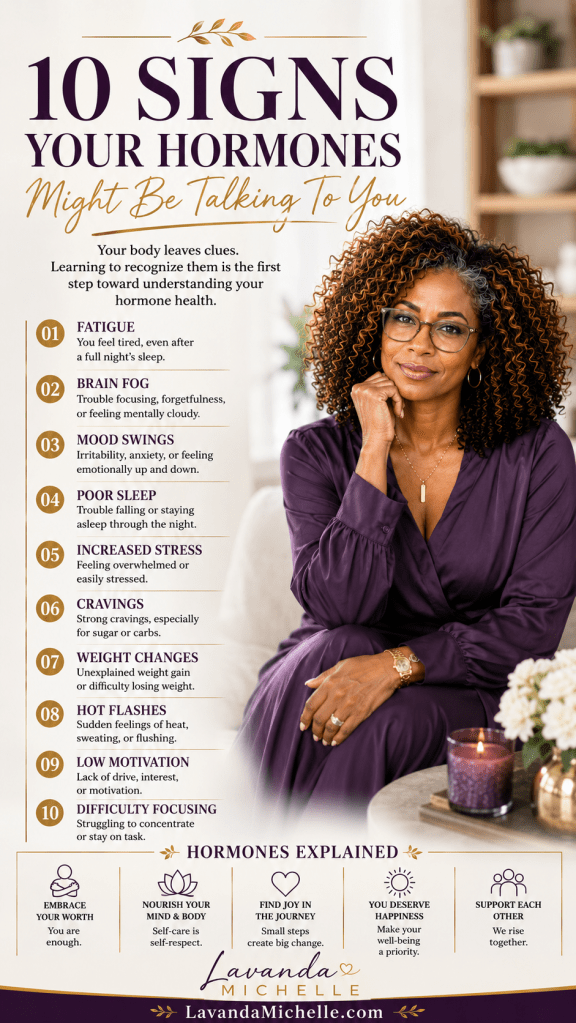
Your body leaves clues. 🌿 From brain fog to fatigue, discover the 10 signs your hormones might be talking to you & how to listen. Read the full wellness breakdown: #LavandaMichelle


This is such an informative and empowering reminder to pay attention to what our bodies are telling us. I appreciate how you emphasized that small symptoms shouldn’t be ignored and that simple, consistent self-care can make a real difference. Thank you for encouraging women to prioritize their health with compassion and grace.
Thank you for sharing such practical and thoughtful information about hormone health. The reminder to listen to our bodies and seek professional guidance when needed is so important. Every woman can benefit from reading this helpful post!