

Brain health depends on everyday choices that support circulation, sensory awareness, sleep, and social connection. Genetics and age affect cognitive change, but they don’t tell the whole story.
Small habits practiced consistently can help you stay attentive, independent, and engaged with the people around you. The best place to begin is with routines that fit naturally into your day, since those are the ones you’re most likely to maintain over time.
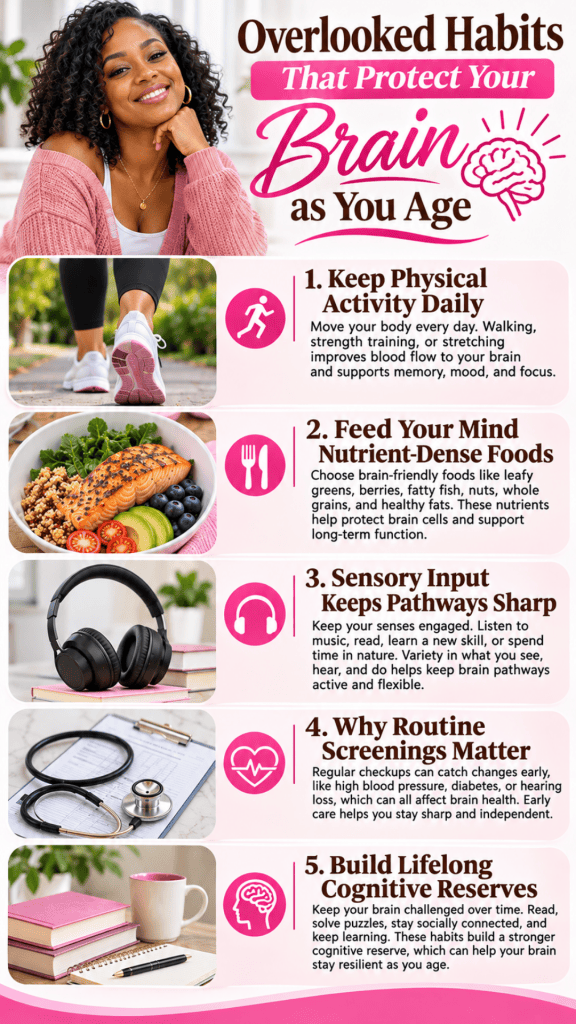
Keep Physical Activity Daily
Aim for some movement every day, even if you don’t complete a formal workout. A brisk 20-minute walk, a morning stretching routine, or an afternoon spent gardening can support blood flow to the brain. The Alzheimer’s Association includes regular exercise among its healthy brain habits, along with protecting sleep and managing health conditions.
Add activity to something already on your schedule. Walk while on the phone, take the stairs when they’re comfortable for you, or do a few chair exercises during a TV break. Include balance and strength work two or three times per week if your health allows. A medical professional can help you choose safe activities if pain, dizziness, or limited mobility makes exercise difficult.
Feed Your Mind Nutrient-Dense Foods
Build meals around vegetables, fruit, beans, whole grains, and healthy fats. These foods provide nutrients that support blood vessels and normal brain function. Frozen vegetables, canned beans with no added salt, and prewashed greens can make balanced meals easier when time or energy is limited.
Simple combinations work well. Try oatmeal with berries and walnuts for breakfast, lentil soup with a side salad for lunch, or roasted vegetables with brown rice and salmon for dinner. Drinking enough water matters too, since dehydration may contribute to fatigue and confusion. You don’t need a perfect menu. Focus on improving the foods you eat most often and discuss major dietary changes with your health care provider if you manage a chronic condition.
Sensory Input Keeps Pathways Sharp
Your brain relies on clear sensory information to understand conversations, respond to your surroundings, and maintain social connections. When sounds become harder to follow, you may start avoiding restaurants, community events, or family discussions. That withdrawal can reduce opportunities for mental stimulation.
Watch for clues such as turning up the television, asking people to repeat themselves, or struggling to understand speech in busy rooms. If those patterns sound familiar, scheduling a free hearing test can provide useful information about your current hearing clarity. Keep vision prescriptions current as well, and use adequate lighting for reading, cooking and stairs. Addressing sensory changes early helps you stay involved in the activities that challenge and engage your brain.
Why Routine Screenings Matter
Schedule regular checkups to track blood pressure, blood sugar, cholesterol, vision, and hearing. Conditions that affect the heart and blood vessels may also affect cognitive health, especially if left untreated. The National Institute on Aging explains several links between medical care and cognitive health in older adults.
Bring a current medication list to each appointment, including nonprescription products and supplements. Ask whether any combination could affect sleep, attention, or memory. Mention changes such as getting lost on familiar routes, missing recurring payments, or having trouble following recipes you once knew well. Occasional forgetfulness can happen at any age, but noticeable changes that interfere with daily life deserve a professional evaluation. Early assessment may identify treatable causes such as sleep problems, medication effects, or vitamin deficiencies.
Build Lifelong Cognitive Reserves
Give your brain regular opportunities to learn, solve problems, and connect with others. Cognitive reserve describes the brain’s ability to adapt and keep working when it faces age-related changes. Reading, taking a class, practicing music, and learning new technology can all add useful mental variety.
Choose activities that require active participation. Discussing a book with friends exercises more skills than reading alone, while learning a new recipe combines planning, measurement, and memory. Social connection adds another layer because conversation asks you to listen, interpret tone, and respond in real time. Rest supports these efforts, so protect a consistent bedtime and use calming habits from this guide to simple self-care routines when stress begins disrupting sleep.
A healthy brain benefits from repetition, but your routine should still offer small challenges. Take a different walking route, learn the names of plants in your neighborhood, or invite someone to cook a new meal with you. Those ordinary moments give your mind fresh information while keeping you connected to daily life.
What are your thoughts about Overlooked Habits That Protect Your Brain as You Age Please share in the comments below. I really would love to know.
Until next time, shine amongst the stars!
‘This post may contain affiliate links
If you haven’t made enough money blogging, look into taking the
Complete Guide to Make Money Blogging for only
($10… WOW 95% Off for a limited time
Genetics aren’t everything! Discover overlooked everyday habits—like movement, sensory care, and routine checkups—that protect your brain and keep you sharp as you age. 🧠✨ Read

