
Seasonal shifts can leave your ears feeling clogged, muffled, or unusually sensitive for days at a time. Changes in air pressure, humidity, and allergens may affect the Eustachian tubes, which help regulate pressure behind the eardrum.
Spring allergies can also cause swelling and congestion that interfere with this process. Although mild pressure often clears on its own, persistent symptoms may need medical attention.
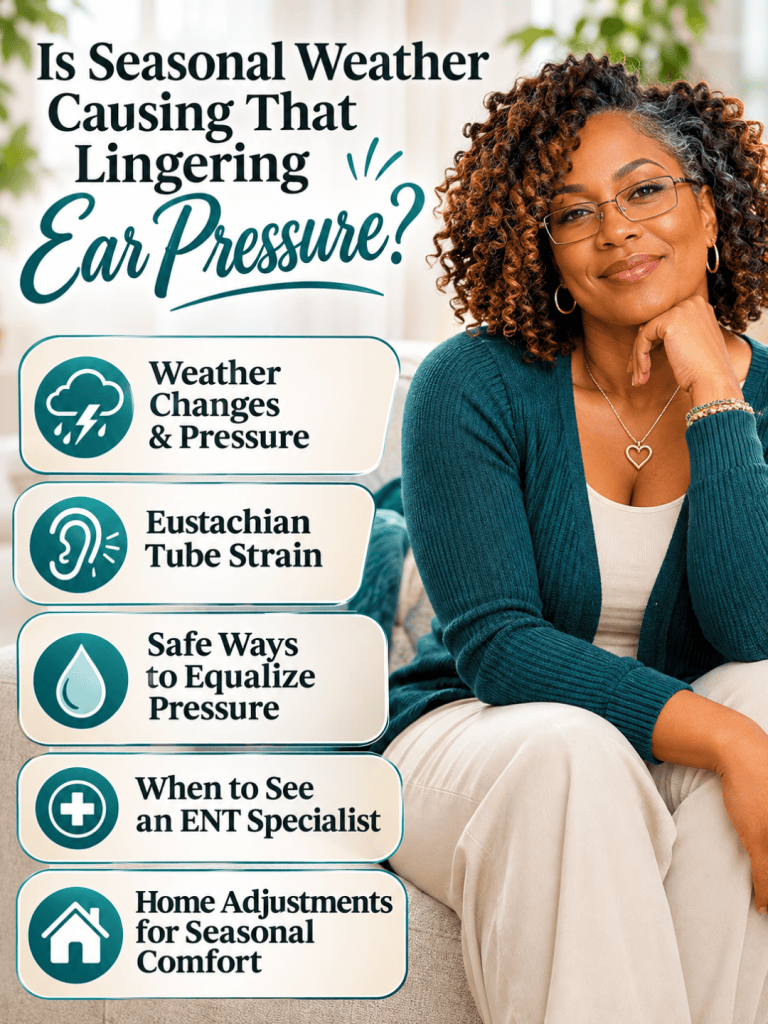
Why Barometric Changes Trigger Head Fullness
Barometric pressure rises and falls as weather systems move through an area. Your middle ear must adjust to match the pressure outside your body. When that adjustment happens slowly, you may notice fullness around the ears, temples, or cheeks.
Rapid changes before a storm can make the sensation more obvious. People with nasal congestion, seasonal allergies, or a recent cold may be especially sensitive because swollen tissue limits airflow. The result can feel similar to the pressure experienced during airplane takeoff, even when you haven’t changed elevation. Mild muffling, popping, and brief discomfort may come and go with the weather.
Understanding Eustachian Tube Strain
Each Eustachian tube connects the middle ear to the back of the nose and throat. It opens briefly when you swallow, yawn, or chew, allowing air to enter or leave the middle ear. Inflammation may prevent it from opening fully, leaving pressure trapped behind the eardrum.
Congestion lasting a few days after a cold is common. Symptoms that continue for several weeks, keep returning, or affect hearing deserve closer evaluation. ENT specialists can examine the ear canal and eardrum, check hearing, and identify concerns such as fluid buildup, infection, or Eustachian tube dysfunction. An exam also helps separate weather-related pressure from jaw tension, sinus problems, and other conditions with similar sensations.
Safe Techniques to Equalize Pressure
Start with gentle actions that encourage the Eustachian tubes to open. Swallow several times, yawn, or sip water slowly. Chewing sugar-free gum may also help during a weather front, a drive through changing elevations, or an airline flight.
You can try closing your mouth, pinching your nose, and swallowing. Stop if the movement causes pain. Avoid forcefully blowing against a closed nose because excess pressure can irritate the eardrum and delicate structures inside the ear.
A warm compress placed over the ear for 10 to 15 minutes may ease surrounding tension. If congestion is present, saline nasal spray can moisturize the nasal passages without the rebound congestion associated with frequent use of some medicated sprays.
Red Flags Requiring ENT Specialists
Seek prompt care if ear pressure comes with sudden hearing loss, intense pain, drainage, bleeding, or severe dizziness. Sudden hearing changes can be time-sensitive, so don’t wait for the weather to improve before contacting a medical professional.
An appointment is also sensible when pressure lasts longer than two weeks, affects only one ear, or repeatedly disrupts sleep and daily activities. Fever, worsening facial pain and thick nasal discharge may point to an infection that needs assessment.
Children may show discomfort differently. Watch for frequent ear pulling, balance trouble, unusual irritability, or difficulty responding to sounds. A clinician can determine whether trapped fluid, infection, or another issue is causing the change.
Home Adjustments for Seasonal Comfort
Track symptoms alongside local weather and pollen reports for two or three weeks. A simple note on your phone can reveal whether ear pressure appears during storms, high-pollen days, or temperature swings. That pattern gives your clinician useful context if the problem persists.
Indoors, replace heating and cooling filters on schedule and keep windows closed when pollen counts are high. A humidifier may help when indoor air feels dry, but clean it regularly and aim for moderate humidity so mold doesn’t grow. Showering and changing clothes after extended outdoor time can reduce the pollen brought into bedrooms. These habits can also support your overall spring wellness routine by helping you maintain a cleaner, more comfortable indoor environment during seasonal changes.
Avoid putting cotton swabs or other objects into the ear canal. If fullness remains after congestion has cleared, arrange an exam instead of repeatedly trying to force the ears to pop. A clear record of timing, hearing changes, and related nasal symptoms can make that visit more productive.
What are your thoughts about Is Seasonal Weather Causing That Lingering Ear Pressure? Please share in the comments below. I really would love to know.
Until next time, shine amongst the stars!
‘This post may contain affiliate links
If you haven’t made enough money blogging, look into taking the
Complete Guide to Make Money Blogging for only
($10… WOW 95% Off for a limited time
Does seasonal weather leave your ears feeling clogged or muffled? 🌧️ Discover why barometric shifts trigger head fullness, safe ways to equalize pressure, and when to see an ENT specialist.

