

Skin rashes are one of those things that seem simple until they show up on your own skin — or your child’s — and suddenly everything looks alarming. Red patches, itching, irritation… many rashes share the same symptoms, which makes it easy to misinterpret what’s going on. It’s common to wonder whether a new spot is just dry skin, an allergic reaction, eczema, or something infectious that needs treatment.
Ringworm is one of the most commonly confused skin conditions because of its name and how similar it can look to other rashes. Despite the name, it has nothing to do with worms. It’s actually a fungal infection that affects the skin, scalp, or nails. The key to handling it well is being able to recognise what sets it apart early.
In this article, we’ll break down how ringworm looks, how it behaves, and how to distinguish it from rashes that may appear similar — so you can respond confidently and avoid unnecessary stress.
The Tell-Tale Appearance of Ringworm
Ringworm often begins as a small, slightly raised, irritated spot. Over time, the irritation spreads outward in a circle, while the centre may begin to look clearer. This is where the characteristic “ring” shape appears — a more pronounced or scaly boundary with softer skin inside the circle. It can show up anywhere, including the body, scalp, feet, and nails.
Because ringworm is a fungal infection, it needs to be treated differently from eczema or dermatitis. Suppose you’re trying to understand what you’re looking at. In that case, an evidence-based resource like a detailed guide on ringworm from Nationwide Children’s Hospital can help you recognise the condition accurately and learn how it spreads, especially in households, schools, and shared-living spaces.
If the rash keeps spreading, has a defined edge, and develops that ring-like pattern (even if faint), that is a strong sign it may be ringworm rather than dry skin or an allergic reaction.

How Ringworm Spreads (and Why That Matters)
One of the biggest distinguishing factors is how quickly ringworm can move. Because it’s fungal, it thrives in warm, moist environments. Gyms, shared towels, locker rooms, bedding, and pets — all can be possible transmission points. This means that noticing pattern + spread is important.
For example:
- If one person in the home develops a ring-shaped rash and a pet has been scratching more than usual, it’s worth checking everyone, including animals.
- If you recently started a new skincare product and the rash stays in one place, slowly fading or changing shape, it may be more consistent with an allergic reaction or irritation rather than ringworm.
Ringworm tends to expand, either slowly or steadily, unless treated. That spreading quality is a major clue.
How It Differs from Eczema, Psoriasis, and Contact Rashes
Eczema and psoriasis usually have softer edges. They tend to appear in patches rather than circles, and they’re influenced by triggers like weather, stress, or scent ingredients. They also often come and go in flares, rather than steadily growing outward like ringworm.
Contact dermatitis (a reaction to something like fragrance or detergent) usually appears shortly after exposure and is more spread-out or blotchy, sometimes accompanied by burning instead of itching.
A quick way to think of it:
- Ringworm → circular, defined edge, spreads outward.
- Eczema/Psoriasis → patchy, dry, often recurring over time.
- Allergic rash → sudden, blotchy, tied to something new.
The visual difference becomes clearer the longer you observe the shape and behaviour of the rash.

What About Ringworm on the Scalp?
Scalp ringworm can be harder to recognise because hair can hide the rash. Instead of a clean ring, people often notice:
- Flaky patches similar to dandruff
- Localised hair thinning
- A spot that feels tender or itchy to the touch
If a child suddenly develops a small circular bald spot with scaling, this is a strong sign to get it checked. Early identification prevents spreading — both to others and to other parts of the scalp.
When to See a Professional
Mild ringworm on the body can sometimes be treated with over-the-counter antifungal creams. But there are several situations where professional evaluation is the better choice:
- The rash is on the scalp or face
- It has spread to multiple areas
- A child or baby is affected
- You’ve tried a cream for a week or more with no improvement
- The rash is painful, swollen, or forming blisters
Getting help early prevents it from spreading to others — especially in shared workplaces, childcare settings, or gyms.

Avoiding Common Mistakes
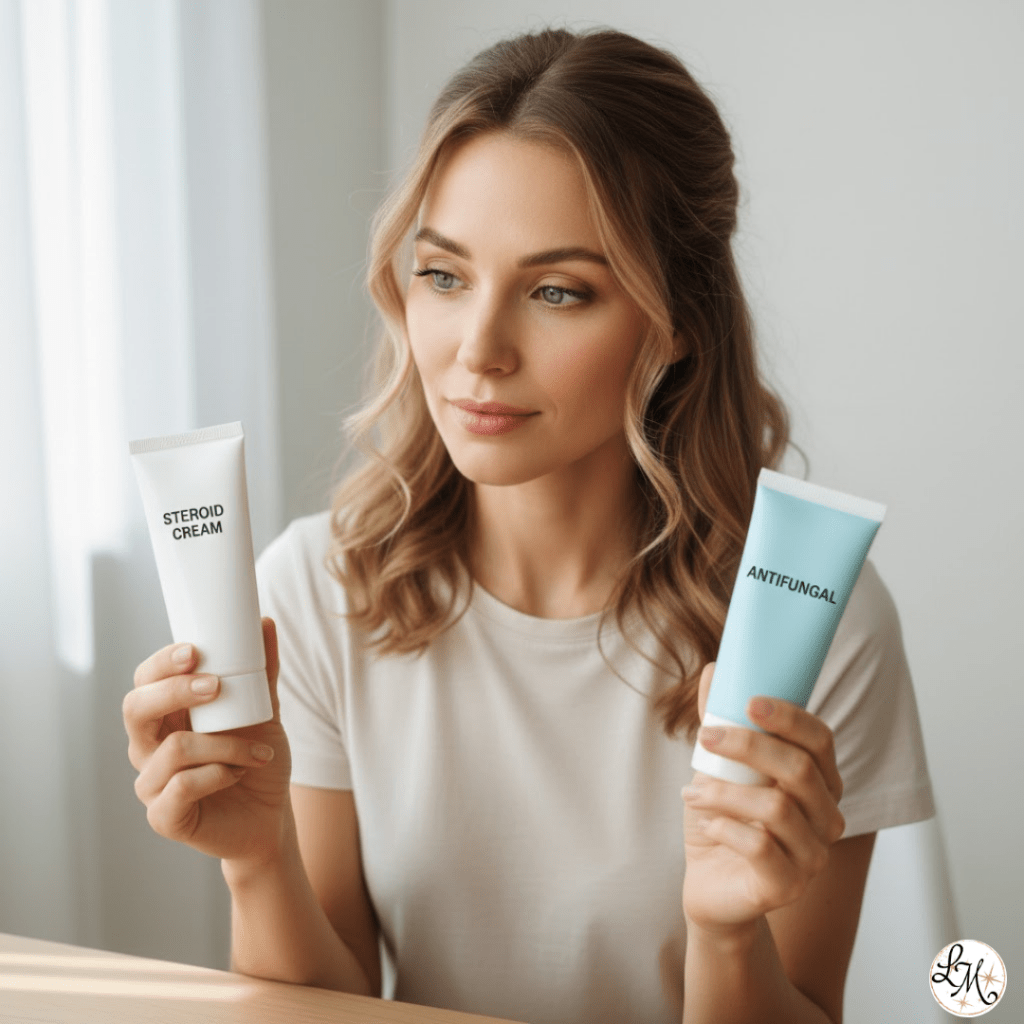
One of the biggest mistakes people make is using steroid creams too early. Steroids can calm redness, but on ringworm, they can cause the fungus to spread faster and appear less ring-shaped, making it harder to recognise. If the rash gets bigger after using a steroid cream, it’s a sign to pause and consult guidance.
Another common error is using the wrong household cleaning approach. Fabrics like pillowcases, hats, blankets, and sportswear may need to be washed in hot water to prevent reinfection.
Small practical steps can make a huge difference.
Conclusion
Ringworm can look confusing at first glance because so many rashes share similar symptoms. But the shape, the defined edge, and the way it spreads are strong indicators that help you tell it apart from other common skin conditions like eczema or allergic reactions.
With the right information and early support, the condition is highly treatable — and taking action early can prevent it from spreading to others.
Pay attention to shape, spread, and behaviour — and when in doubt, getting medical guidance is always the safest next step.
Ringworm vs Other Rashes: How to Tell the Difference
Until next time, shine amongst the stars!
‘This post may contain affiliate links


If you haven’t made enough money blogging, look into taking the
Complete Guide to Make Money Blogging for only
($10… WOW 95% Off for a limited time).


Is it ringworm or just an allergic rash? 🧐 Many skin conditions look alike! Learn the key differences (shape, spread, and behavior) between ringworm vs other rashes to know when to seek help and stop the spread. #Ringworm #SkinHealth #WellnessTips
