

If you’ve been following my 100-Day Lock-In journey, you know I don’t play when it comes to discipline. Since starting this challenge on February 27th, I’ve been sharing the raw truth about my weight loss, my 5:00 AM wake-up calls, and exactly what I’m putting into my body to hit my goals.
Today, I’m diving deep into the “why” behind my schedule. For years, I’ve studied the science of health, and time and time again, I come back to one simple, powerful tool: 16:8 Intermittent Fasting.
The Science That Changed My Mind
I didn’t just wake up and decide to stop eating at 4:00 PM. I’ve been a student of Intermittent Fasting (IF) since 2016. I started with the basics like The FastDiet, but everything clicked when I found the work of Cynthia Thurlow.
In her transformational TEDx talk, Cynthia explains a concept that every woman over 40 needs to hear: We have to stop being “Sugar Burners” and start being “Fat Burners.” When we eat all day long—snacking from sunrise to bedtime—our insulin stays spiked. Insulin is a storage hormone. If it’s high, your body is biologically locked out of its own fat stores. By fasting for 16 hours, we lower those insulin levels, allowing the body to finally tap into stored energy. As Cynthia says, it’s free, flexible, and simple.
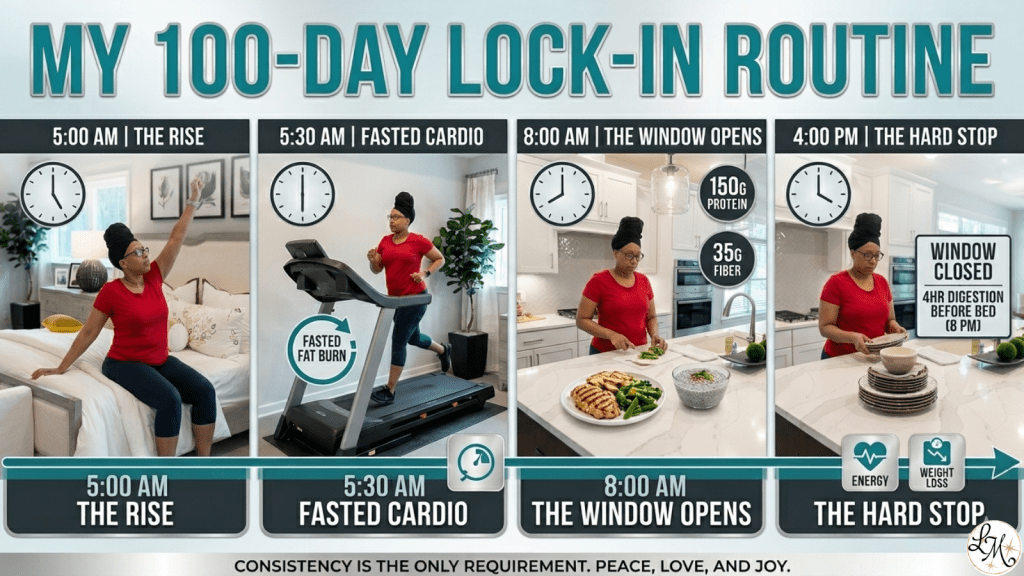
My 100-Day Lock-In Routine
Here is how I structure my day to ensure I’m losing weight while keeping my energy high:
- 5:00 AM | The Rise: I wake up early to beat the world.
- 5:30 AM | Fasted Cardio: I hit my treadmill for 45 minutes. Doing this in a fasted state is a tip I picked up from Thomas DeLauer. Without a recent meal to burn off, my body goes straight to the source—stored fat.
- 8:00 AM | The Window Opens: This is when I start my 8-hour eating window.
- 4:00 PM | The Hard Stop: I finish my last meal. This gives my body 4 hours of digestion before I head to bed at 8:00 PM.
The Health Benefit: As a lifelong asthma warrior, this 4-hour buffer before sleep is a game-changer. It reduces inflammation and prevents nighttime flares, helping me breathe easier and sleep deeper.
The “Magic” Numbers: 150g Protein & 35g Fiber
Fasting is the when, but the what is just as important. To lose 20 lbs in 30 days, I’ve set non-negotiable nutritional targets:
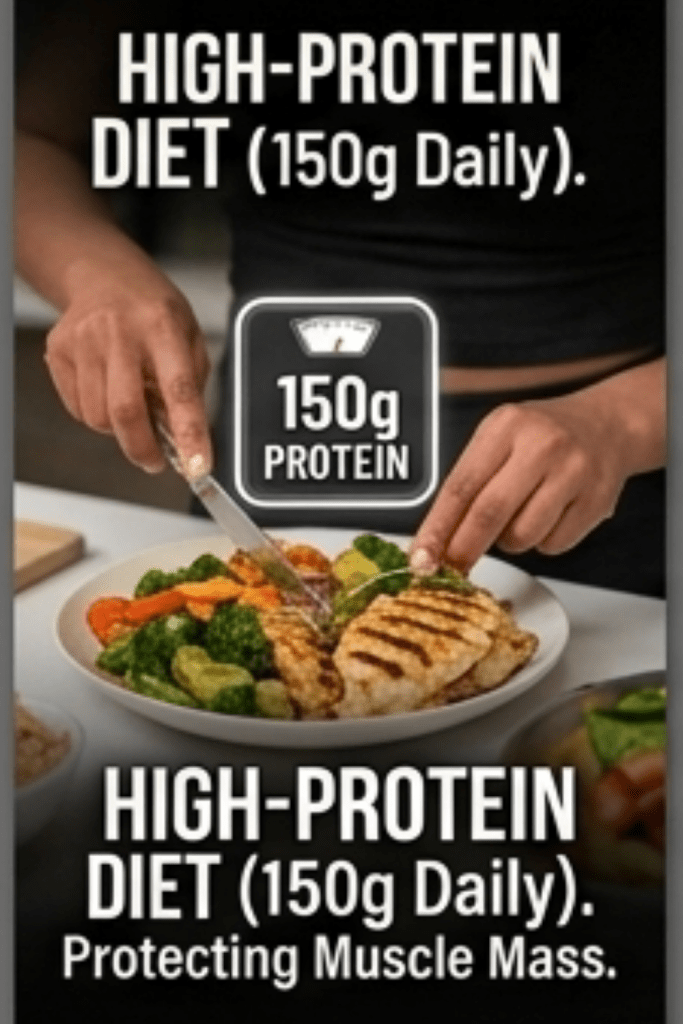
1. 150 Grams of Protein
I follow a high-protein, animal-based diet. Protein is the most satiating macronutrient. It protects my lean muscle mass while the fat drops off. By hitting 150g, I’m never “hangry”—a state Cynthia Thurlow warns can ruin any health journey.
2. 35 Grams of Fiber
Fiber is my secret for staying full until 8:00 AM the next morning. I aim for 35 grams daily to keep my digestion moving and to feed the good bacteria in my gut. As the experts say, fiber is like “spring cleaning” for your insides.
Final Thoughts: Peace, Love, and Joy
At 47 years old, 5’2”, and currently 249.6 lbs, I am proof that it is never too late to reclaim your health. Intermittent fasting isn’t about deprivation; it’s about alignment. It’s about giving your body the time it needs to heal, repair (through a process called Autophagy), and reset.
If you are ready to lock in with me, start simple. Find your window. Prioritize your protein. And most importantly, listen to your body.
MEDICAL DISCLAIMER: I am sharing my personal journey and what works for me. I am not a doctor or a nutritionist. Intermittent fasting and high-protein diets may not be suitable for everyone, especially those with pre-existing conditions. Please consult with a healthcare professional before starting any new fasting or exercise routine.
If you haven’t made enough money blogging, look into taking the
Complete Guide to Make Money Blogging for only
($10… WOW 95% Off for a limited time).

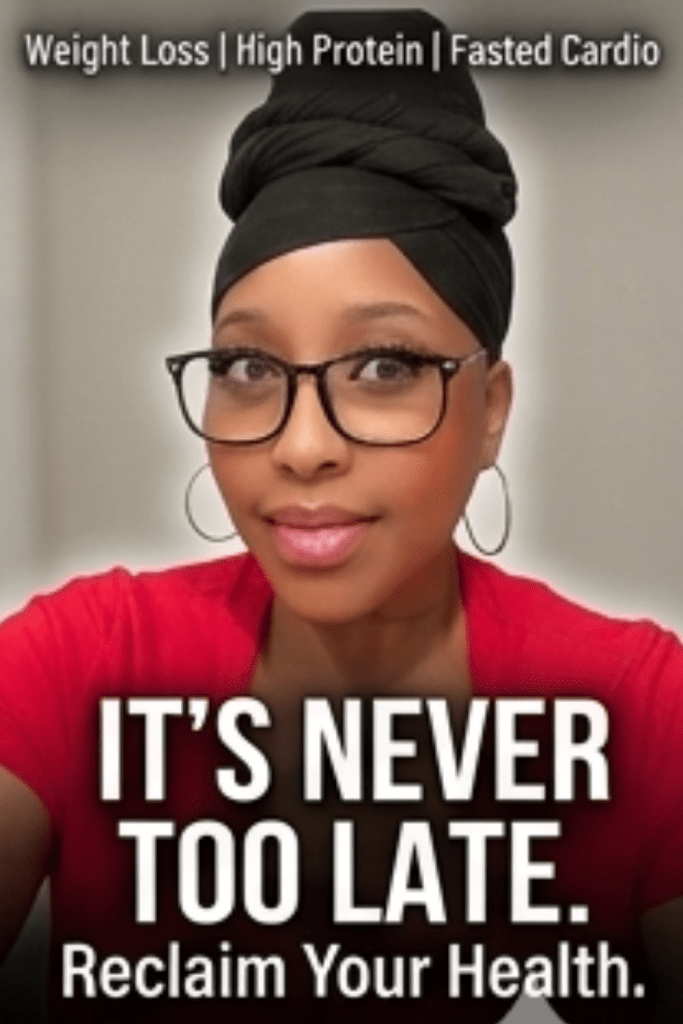
Are you trying Intermittent Fasting? Drop your window in the comments below!
Discipline meets science! 16:8 Intermittent Fasting is the engine behind my 100-Day Lock-In. From 5AM cardio to hitting 150g of protein, here is exactly how I’m reclaiming my health. 🔒✨ #100DayLockIn #IntermittentFasting #WeightLoss
