
Flags are incredibly powerful symbols. They do more than just mark a territory; they tell a visual story of identity, struggle, triumph, and hope. Within Black history and culture, several distinct flags have been birthed out of a need for representation, unity, and a reclamation of heritage.
While they all celebrate Black identity and liberation, each carries its own unique origin story and symbolism. Let’s explore the history and meaning behind three of the most prominent banners of freedom.


1. The Black American Heritage Flag
The Symbol of Rooted Identity
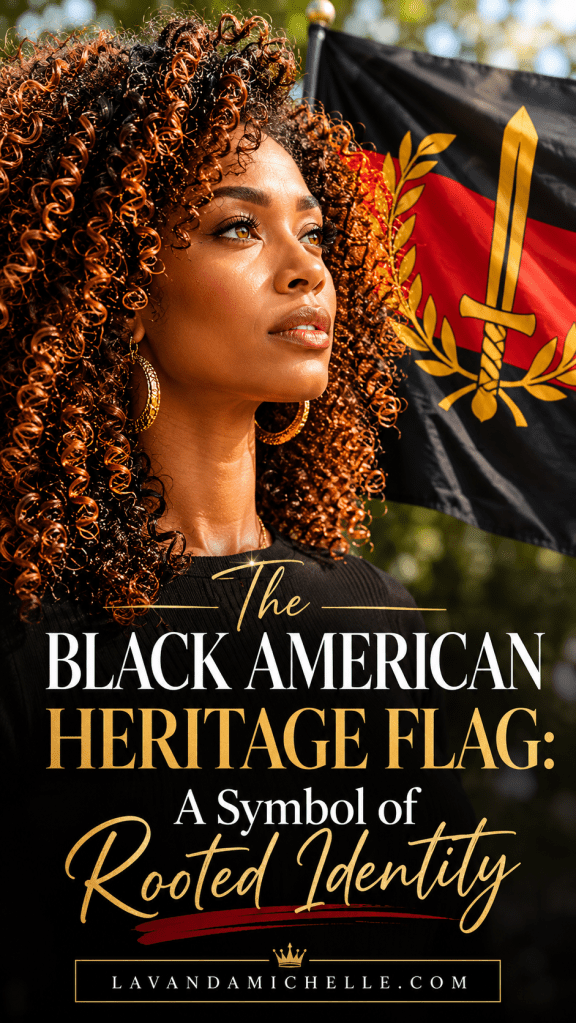
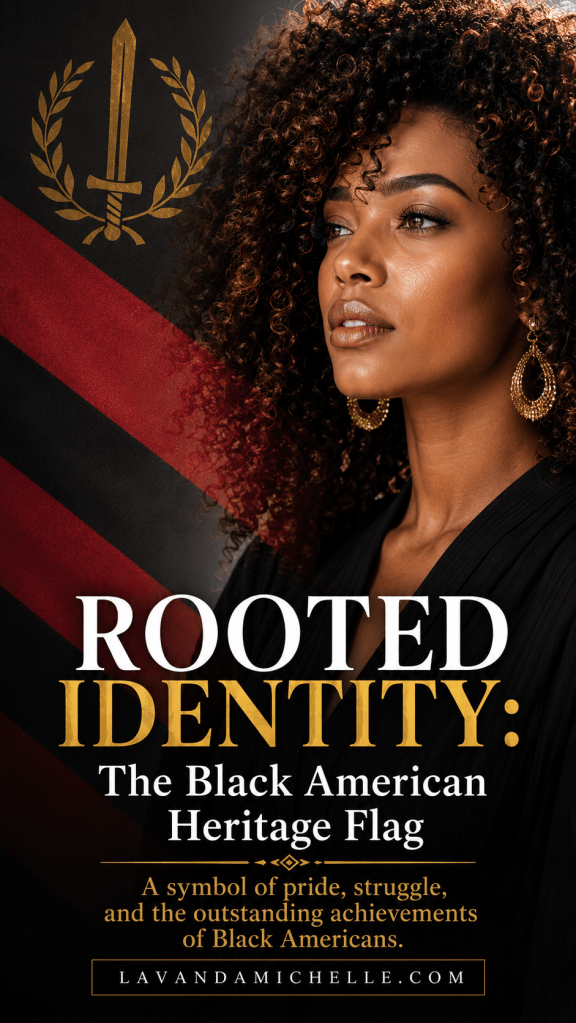
Created in 1967 by Melvin Charles and Gleason T. Jackson, the Black American Heritage Flag was born during the height of the Civil Rights Movement. The creators realized that while African Americans were fighting hard for their civil rights, they lacked a specific, unifying symbol that acknowledged both their African roots and their deep historical contributions to the growth of America.
The Symbolism:
- The Colors: The flag features striking diagonal stripes of black and red. Black represents pride in Black skin, culture, and identity. Red symbolizes the rich blood shed by African Americans for freedom, justice, and the building of a nation.
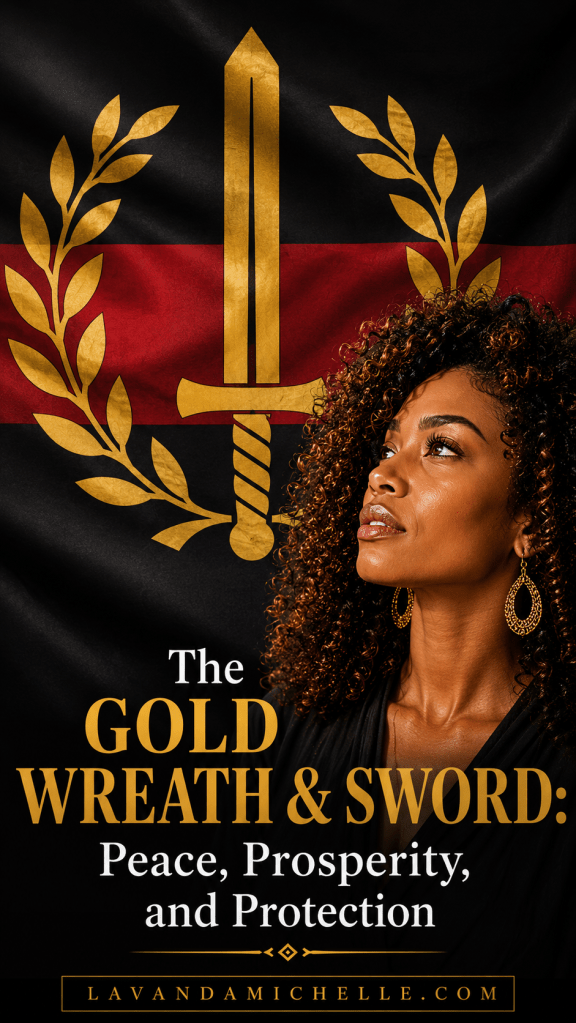
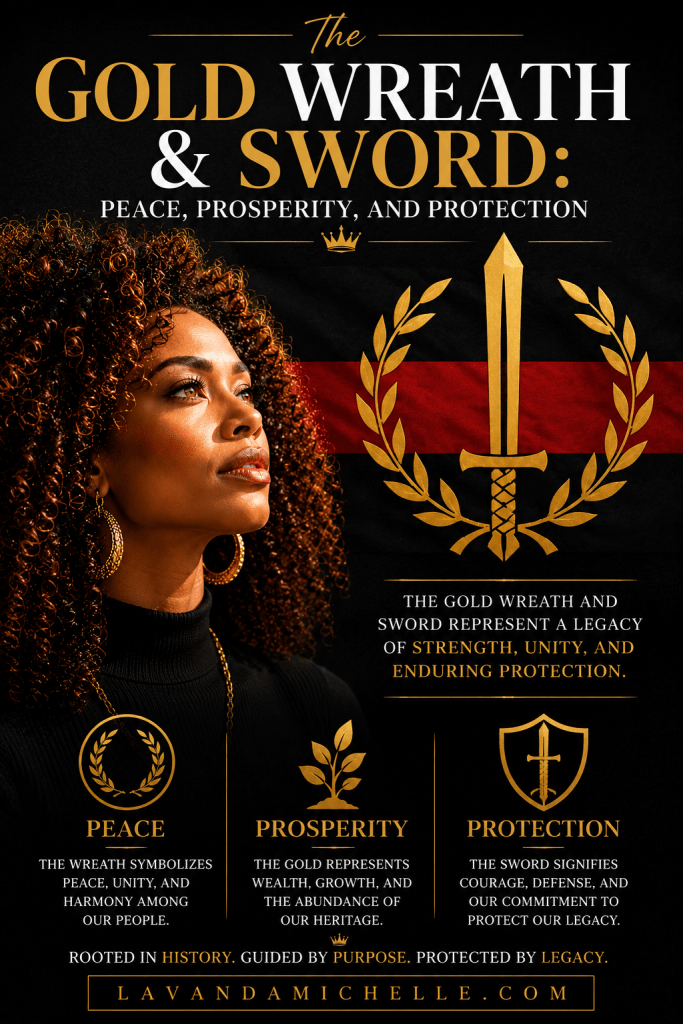
- The Golden Wreath & Sword: At the center sits a brilliant gold fig leaf wreath surrounding a blunted sword. The wreath represents peace, prosperity, growth, and the outstanding achievements of Black Americans. The blunted sword represents strength, protection, and historical struggle—rendered blunt to signify a pursuit of ultimate peace over violence.

2. The Juneteenth Flag
The Banner of Freedom Realized
The Juneteenth Flag is a modern symbol dedicated to a historic milestone. Designed in 1997 by activist Ben Haith (and later refined by illustrator Lisa Jeanne Graf), this flag specifically commemorates June 19, 1865—the monumental day Union soldiers arrived in Galveston, Texas, to ensure all enslaved people were finally declared free, two and a half years after the Emancipation Proclamation.
The Symbolism:
- The Central Star: The large white star in the center represents Texas (The Lone Star State) where Juneteenth originated. However, it also symbolizes the freedom of African Americans across all 50 states.
- The Nova (Burst): The geometric, multi-pointed burst surrounding the star represents a nova, or a new star in the heavens. This signifies a brand-new beginning and a bright, horizon-expanding future for Black Americans.
- The Curved Horizon: The smooth, curved line dividing the red and blue sections represents a new horizon of opportunity, promise, and a rising future.
- The American Connection: By intentionally using the red, white, and blue of the United States flag, the design asserts a powerful, undeniable truth: that the formerly enslaved and their descendants are, and always have been, fully American citizens entitled to life, liberty, and the pursuit of happiness.


3. The Pan-African Flag
The Global Standard of Liberation
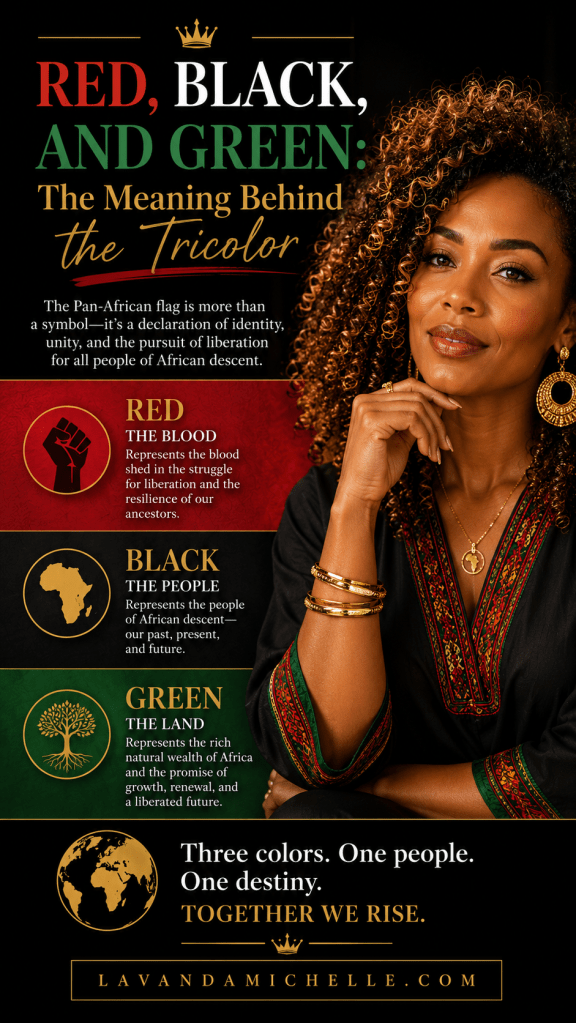
Also known as the UNIA Flag, the Marcus Garvey Flag, or the Afro-American Flag, the Pan-African Flag is a legendary horizontal tricolor. Created in 1920 by Marcus Garvey and the Universal Negro Improvement Association (UNIA), this flag was a direct response to a deeply felt need for a global symbol for people of African descent worldwide. Garvey famously noted that every race had a flag except for the Black race, prompting him to establish this timeless standard of pride.
The Symbolism:
- Red: The top horizontal band represents the blood that unites all people of African ancestry, as well as the blood shed during the long, ongoing fight for liberation and justice.
- Black: The center band represents the people themselves—a proud, bold, and beautiful affirmation of Black identity and existence.
- Green: The bottom band represents the abundant natural wealth, fertility, and vibrant lands of Africa, honoring the ancestral homeland of the diaspora.

A Tapestry of Shared Legacy
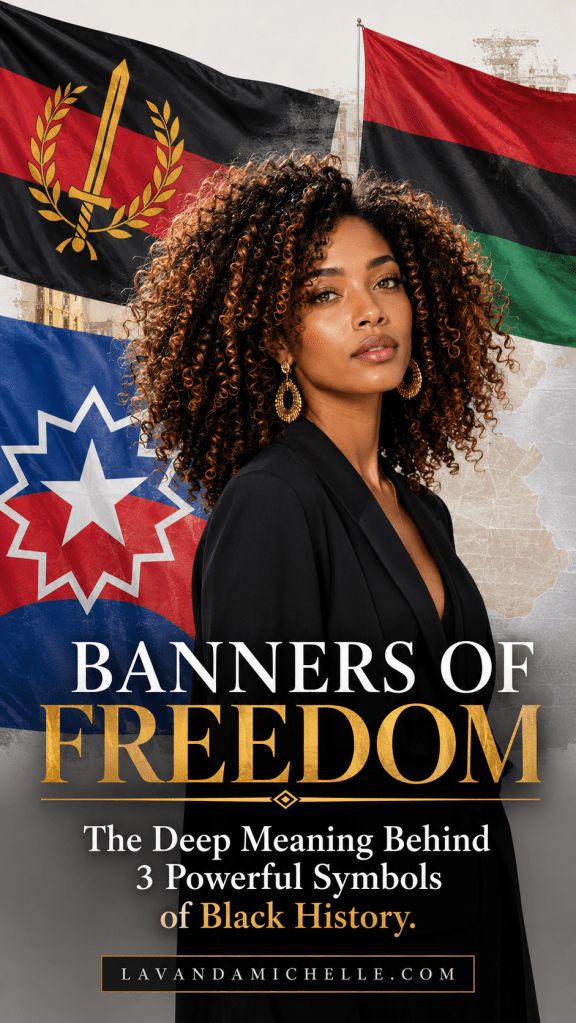
These flags do not compete with one another; instead, they complement each other beautifully. Together, they weave a comprehensive tapestry of the Black experience. One acknowledges global, ancestral roots; another celebrates a specific, hard-fought milestone of American freedom; and the third honors a distinct cultural heritage built right here at home. Understanding their meanings allows us to honor the deep layers of history, resilience, and joy they represent.
Let’s Connect!
Which of these flags resonates with you the most, or did you learn something new about their design details today? Let me know your thoughts in the comments below!
What are your thoughts about Banners of Freedom: The Meaning Behind 3 Powerful Black History Flags Please share in the comments below. I really would love to know.
Until next time, shine amongst the stars!
‘This post may contain affiliate links


If you haven’t made enough money blogging, look into taking the
Complete Guide to Make Money Blogging for only
($10… WOW 95% Off for a limited time).


Flags are visual stories of resilience. From the Pan-African tricolor to the symbols of Juneteenth, discover the deep meaning and history behind 3 powerful banners of Black identity. 🌟✨✨ ❤️ #LavandaMIchelle
