

Macros, short for macronutrients, are the building blocks of your nutrition—and understanding them is a game-changer for weight loss. While counting calories matters, knowing where those calories come from is just as important.
What Are Macros?
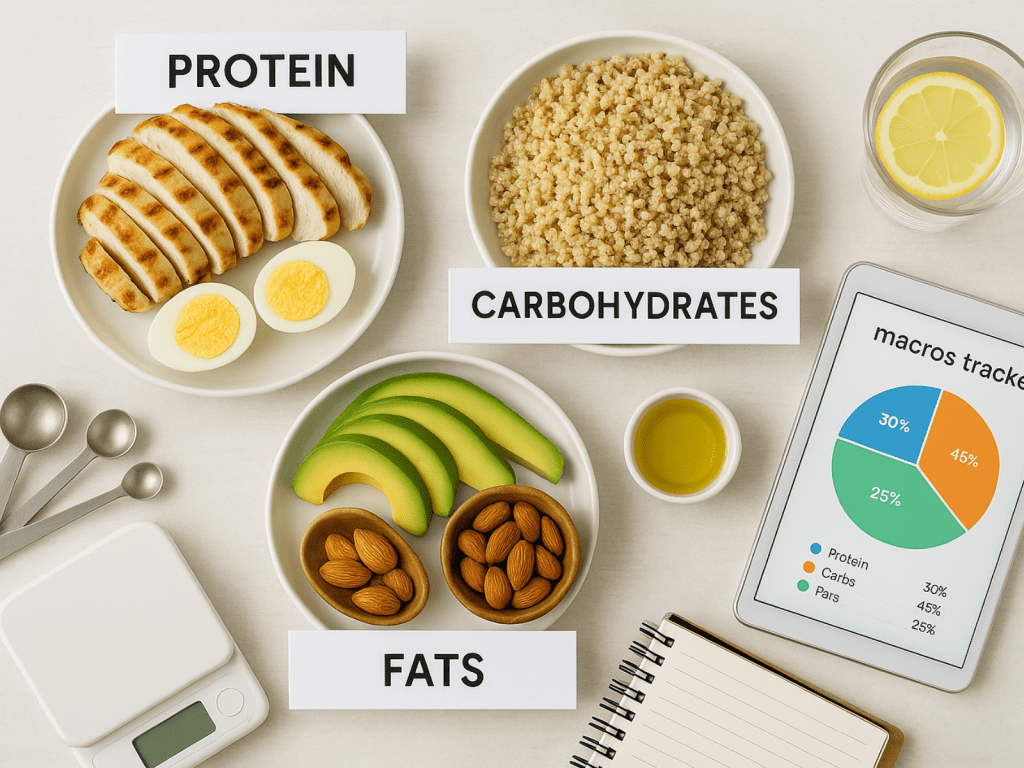
There are three main macronutrients:
- Protein – Builds and repairs muscles, keeps you full, and supports metabolism.
- 1 gram = 4 calories
- Sources: Chicken, fish, tofu, eggs, legumes
- Carbohydrates – Your body’s main energy source.
- 1 gram = 4 calories
- Sources: Fruits, veggies, whole grains, legumes
- Fats – Essential for hormone function, brain health, and long-term energy.
- 1 gram = 9 calories
- Sources: Avocados, nuts, olive oil, fatty fish
Some also include alcohol as a “fourth macro” (1 gram = 7 calories), but it’s not essential for health or weight loss.
Why Are Macros Important for Weight Loss?
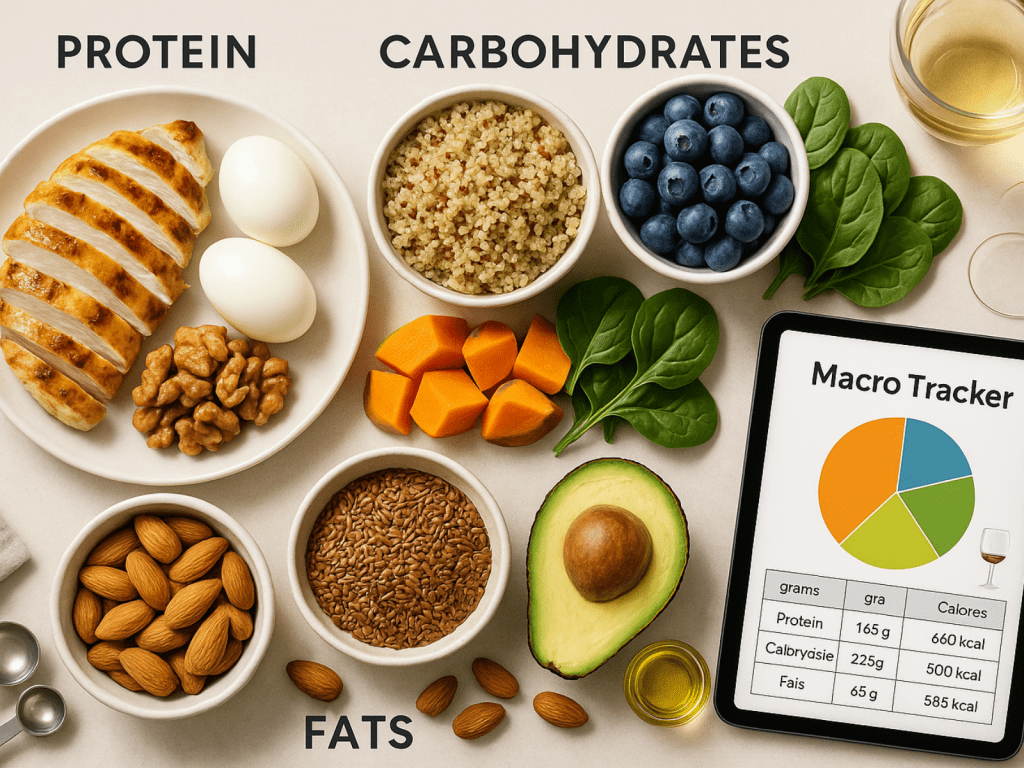
If you only count calories, you might lose weight unintentionally by sacrificing muscle or eating nutrient-poor foods. But when you track macros, you’re shaping your body with purpose.
Here’s why macros matter:
1. Support Muscle Retention & Fat Loss
Getting enough protein helps preserve lean muscle while losing fat, especially when combined with strength training.
2. Keeps You Satisfied & Energized
The right balance of carbs and fats provides energy and satisfaction. Low-fat or low-carb diets work for some—but knowing your macro balance helps you feel full, reduce cravings, and avoid burnout.
3. Prevents Plateaus
If you’re not losing weight, tweaking your macros (like increasing protein or adjusting carbs) can help you break through plateaus without drastically cutting calories.
4. Customizes Your Plan
No two bodies are the same. Some people thrive on more carbs, others on higher fat. Knowing your macros lets you adjust based on your unique body and goals.
How to Calculate Your Macros
First, determine your calorie needs (via TDEE). Then apply a macro split based on your goals:
For fat loss with muscle retention:
- Protein: 30–35%
- Carbs: 30–40%
- Fats: 25–30%
Example for a 1,800-calorie diet:
- Protein: 180g (720 cal)
- Carbs: 135g (540 cal)
- Fat: 60g (540 cal)
You can use macro calculator tools or apps like MyFitnessPal or Chronometer to simplify this process.

Macro-Friendly Weight Loss Tips
- Prioritize protein with every meal
- Choose whole carbs (fruits, veggies, grains)
- Don’t fear healthy fats—they keep you satisfied
- Plan meals ahead to stay on track
- Adjust macros as your weight or activity level changes
Final Thoughts
Understanding your macros puts you back in control of your weight loss. Instead of starving or relying on fad diets, you’re fueling your body with the right nutrients to burn fat, build muscle, and stay energized.
Tracking macros may feel overwhelming at first—but once you understand the balance, it becomes one of the most empowering tools on your weight loss journey.

What Are Macros and Why Knowing Them Is Essential for Weight Loss?
Until next time, shine amongst the stars!
‘This post may contain affiliate links

If you haven’t made enough money blogging, look into taking the
Complete Guide to Make Money Blogging for only
($10… WOW 95% Off for a limited time).

Macros matter! 💪 Learn how protein, carbs & fats help you lose fat, build muscle & stay full. Track your macros for smarter, sustainable results! 🔥 #Macros #WeightLossTips #Nutrition #FitnessJourney

Oh wow, you explained macros in such a clear way! It really helps to understand how they work for better food choices. Great post 👌🏻.
Did not know of the concept of macros in dieting at all, so learned something today. Thanks for breaking it down so well
I’ve started looking at my macros very recently. Macros do better if you want to eat healthier and smarter with your food choices.
Some very important information on macros here. I know the importance of them because it worked for me before. I need to do it again
It’s nice to know a bit more about macros. I knew very little, but this taught me some more. Great to know more about them and weight loss.